
AI FOR ALM & IBM ELM
Accelerate yourengineeringrequirementsALMwith AI.
Automate requirement analysis, detect duplicates and conflicts, and ensure compliance — directly within your ALM ecosystem.

Boost your engineering with AI
AI for Requirements Engineering and ELM
Increase productivity during requirements gathering and, in particular, support engineers to generate requirements documents with higher quality, shorten the time required for the generation of requirements documents.
Increase
Productivity
Increase productivity
with AI by automating repetitive tasks, accelerating analysis, and enabling faster, data-driven decision-making across the entire engineering lifecycle.
Make AI work
for YOU
Easy Tailoring
Adjust AI capabilities to your IBM ELM environment with our services and flexible deployment options.
Connect AI to
IBM ELM
Unlock Capabilities
Unlock endless possibilities across IBM ELM, requirements engineering, MBSE, testing, reporting, and project management with AI-driven capabilities that adapt and scale to your needs.
Why AI for Requirements Engineering
Modern engineering projects demand more than manual discipline can deliver. The gap between what teams need and what traditional tooling provides is widening — and it shows in project outcomes.
The challenges every requirements team faces:
▸No guidance at the point of writing — requirements vary in quality across authors, with no real-time feedback or standardized checks.
▸Inconsistent templates and criteria — teams reinvent the wheel on every project, with no shared baseline for what a 'good' requirement looks like.
▸Hidden interdependencies — without clear process visualization, overlooked relationships between requirements lead to costly rework.
▸No single source of truth — knowledge is scattered across meetings, emails, documents, and disconnected tools.
▸High consolidation effort — pulling requirements together from multiple sources is manual, slow, and error-prone.
AI closes these gaps by bringing consistency, speed, and intelligence to every stage of the requirements lifecycle — from authoring and review to impact analysis and test generation.
Use Cases
FlexibleAI MODELSLOGICTECHNOLOGIESto make AI work for you
Discover AI use cases which helps you to become more productive
Requirements Quality Analysis
Automatically evaluate requirements as they are written to ensure compliance with standards such as INCOSE guidelines. Detect weak wording, ambiguity, duplicates, and much more.
Engineering Assistant
Support engineers to ask natural-language project questions and instantly retrieve relevant information. Search across IBM ELM, databases, and other documentation.
Agentic AI, RAG & MCP
Turn requirements into an intelligent system. AI agents combine Retrieval-Augmented Generation (RAG), vector search, and knowledge graphs to analyze, generate, and validate requirements.
Boost Engineering Productivity
Duplicate & similarity detection & AI-assisted Impact analysis. Generate requirements with AI based on templates. Similar & duplicate search helps reduce manual effort and focus on high-value work.
STRUCTURED DATA
Requirements Quality Analysis
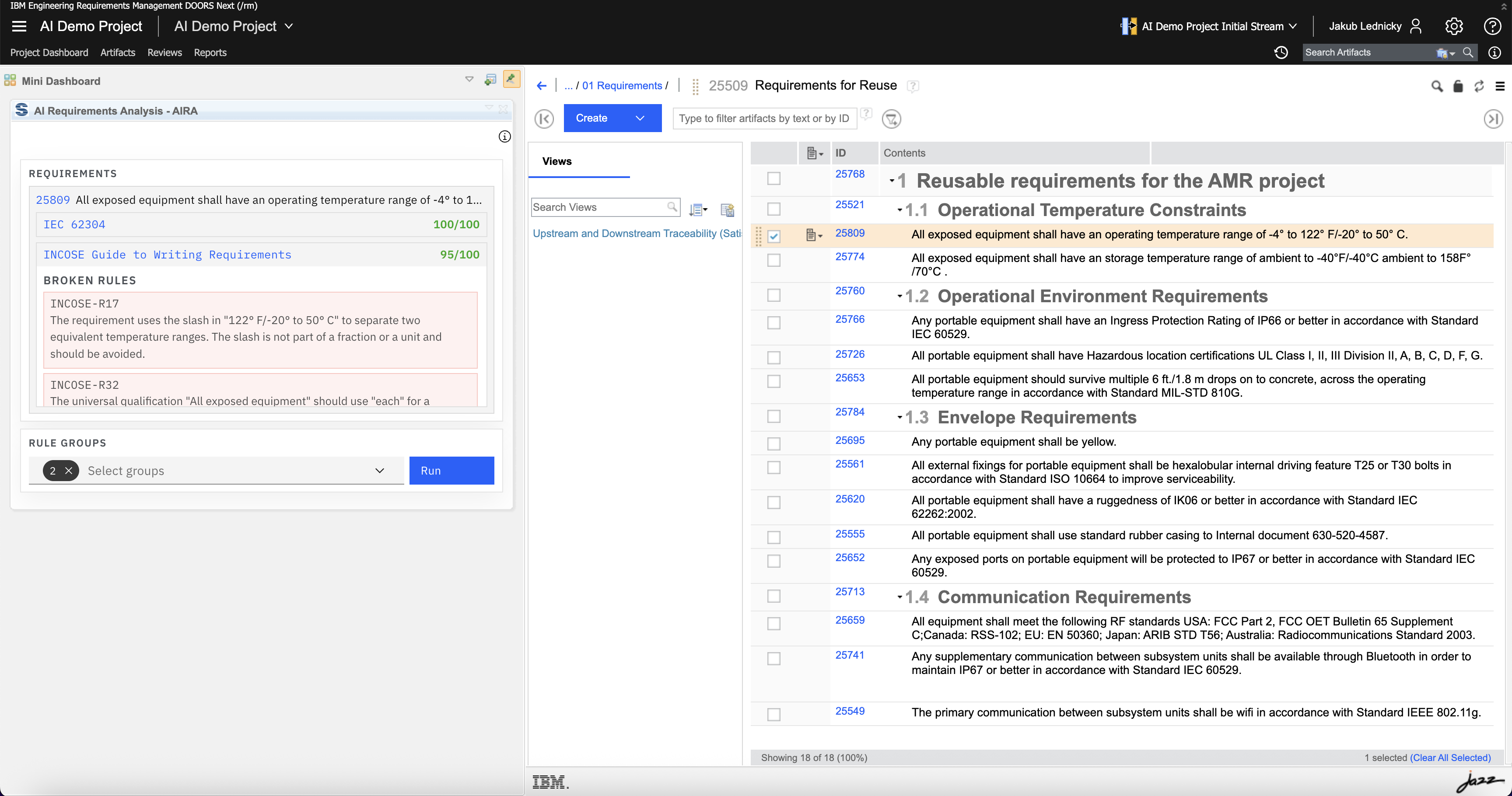
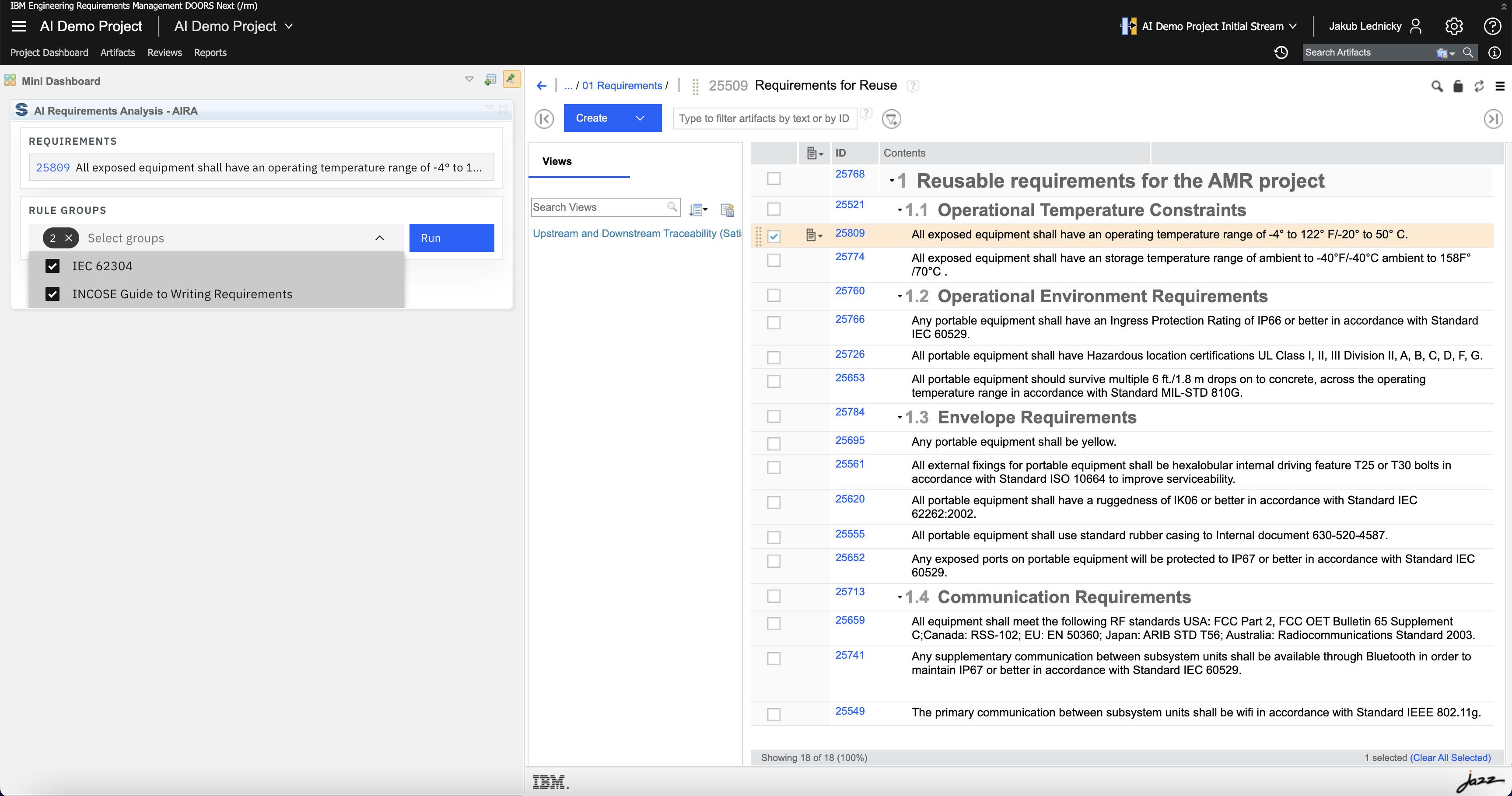
Analyze requirements against industry standards to generate quality scores with detailed feedback, with recommendations for wording enhancements that raise requirement quality scores.
Requirements quality
The Requirements Quality Assistant evaluates requirements against standards (INCOSE Guide to Writing Requirements). It identifies ambiguity, weak wording, and inconsistencies. It provides instant feedback to improve clarity, completeness, and overall quality.
- Improve clarity and precision of requirements
- Accelerate review and sign-off
- Minimize downstream risks and iterate faster
- Support continuous improvement in writing quality
Well-written requirements are critical to successful engineering projects. Poor requirements lead to delays, cost overruns, and misalignment.
The solution detects issues early, highlights ambiguous phrasing, and suggests improvements. Engineers can see how changes affect quality scores, reducing the effort required for authoring, reviewing, and updating while allowing senior engineers to focus on higher-value work.
Requirements conformity
AI-driven analysis ensures traceability of safety-critical requirements, identifies gaps, and supports compliance with relevant standards.
- Verify adherence to safety standards
- Detect traceability gaps and inconsistencies
- Generate project-wide summaries for reporting
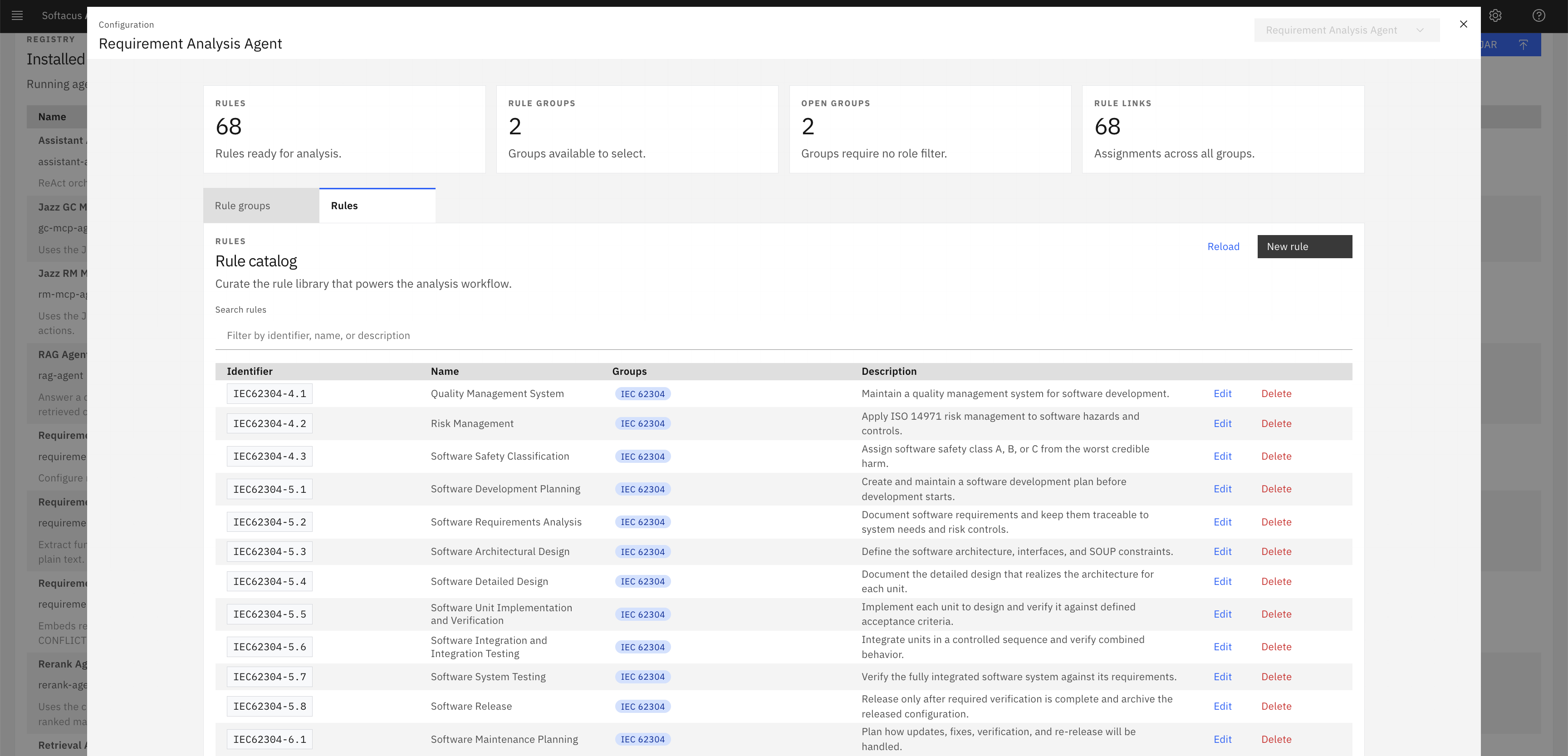
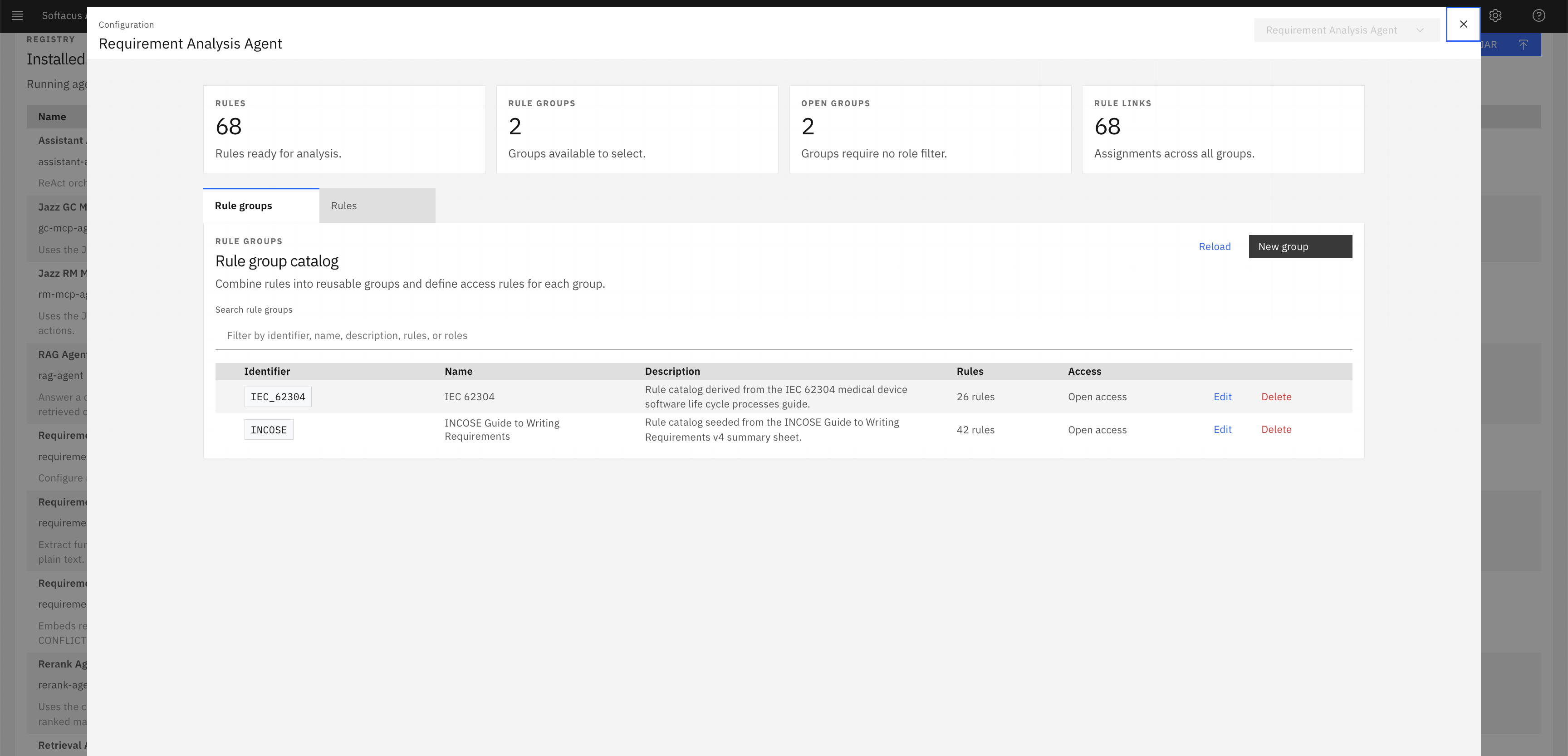
This improves quality assurance, reduces risk, and supports better decision-making. Supports the definition and application of custom quality rules, standards, and regulations for requirements analysis.
Incoming requirements can be automatically structured and distributed across teams. The AI agent also analyzes historical data to identify patterns and predict risks, enabling proactive issue resolution and smoother project execution.

AI for DOORS NG
IBM DOORS Next Generation
Requirements Assistant
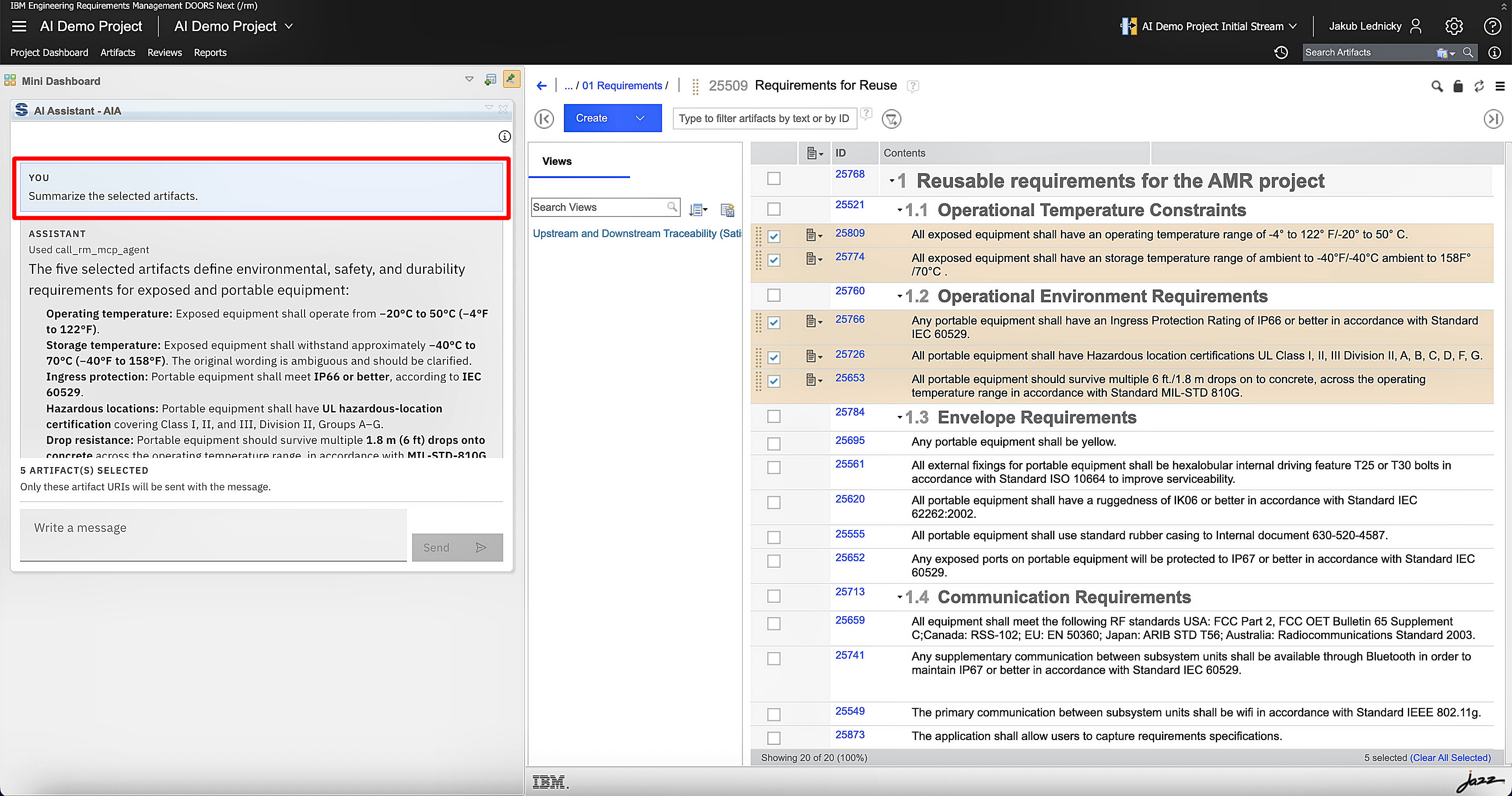
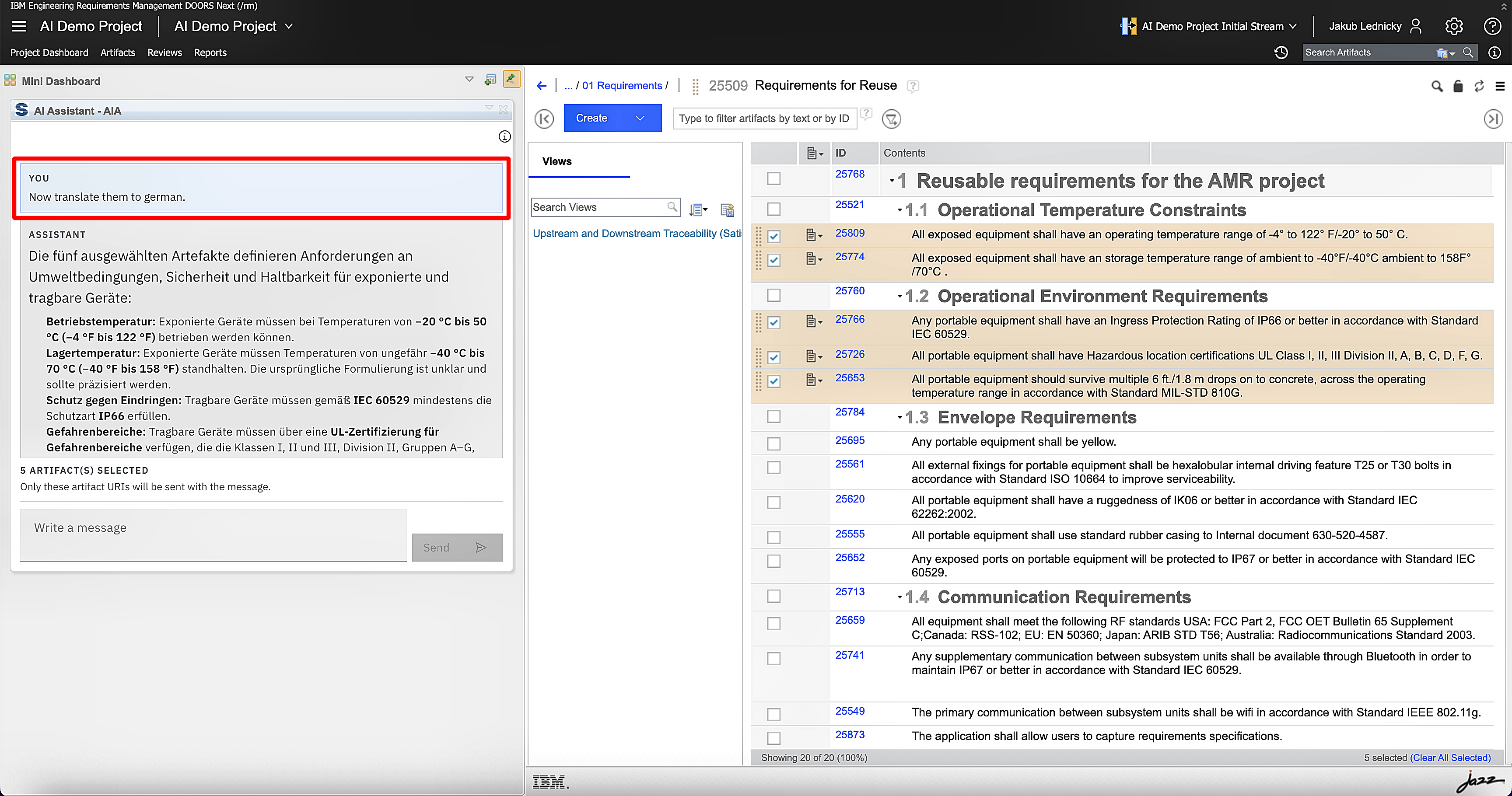
Use a natural language interface for requirements, enabling conversational queries, topic-based searches, summaries, and translations.
- Can use and orchestrate other AI agents, bringing the functionality of the AI system together in a single natural-language interface.
- Through MCP integration, interacts directly with IBM ELM applications such as DOORS Next and Engineering Test Management (ETM) — to read, create, analyze, update, and delete artifacts, work items, test artifacts, links, and other supported entities.
- Can execute multi-step operation chains, for example: summarize a set of requirements → translate the result → write the translated text back to a selected attribute.
- This positions the Requirements Assistant as a unified natural-language entry point for interacting with the different AI agents and connected ELM systems.
AI enabled search
Search across multiple connected sources, including IBM Engineering Lifecycle Management (ELM), vector stores, knowledge graphs, databases, and documentation, to quickly find relevant information. The system provides context-aware results, allowing engineers to access the appropriate data without switching between tools.
Ask questions
Ask questions in natural language and get precise, context-aware answers instantly. The agent understands your project data and retrieves relevant insights from connected systems to support faster, more informed decision-making. It provides requirement tips and considerations based on the current context.
AI Assisted Translation
Easily understand the content written in a foreign language.
Rewrite requirements into a local/foreign language while keeping guidelines for writing good requirements
Summarize Content
Reduce misinterpretation of large volumes of requirements
- Improve team collaboration across global projects
- Better alignment and shared understanding of requirements
- Summarize project, module, or other data
BOOST AI
Agentic AI, MCP, RAG, Vector Store and Knowledge Graph
AI agents are used for tasks that enable automated processing or deployment. These tasks include uncovering inconsistencies, such as when a requirement contradicts a standard or norm in the knowledge graph, or the generation of requirements and test cases based on text specifications or chat commands.
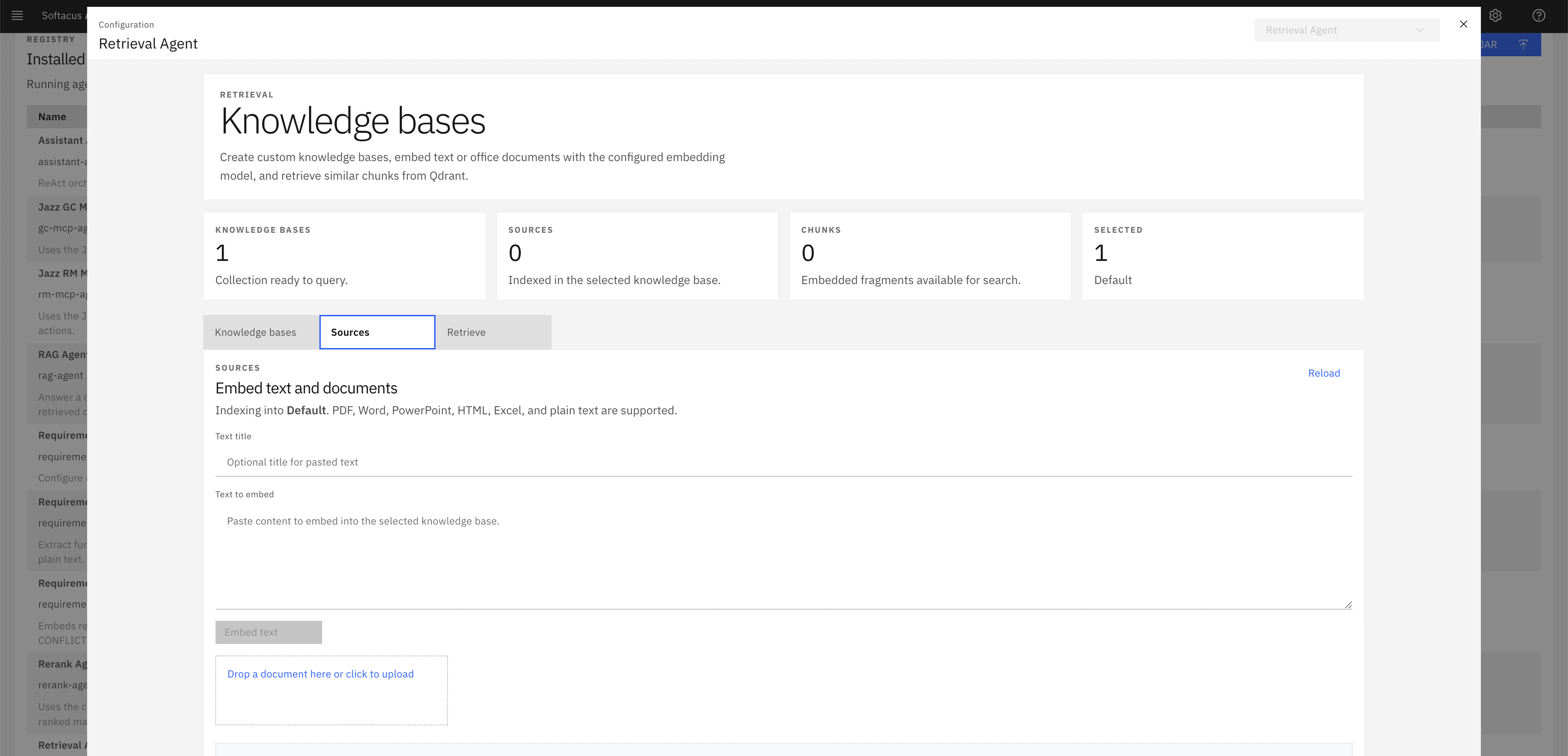
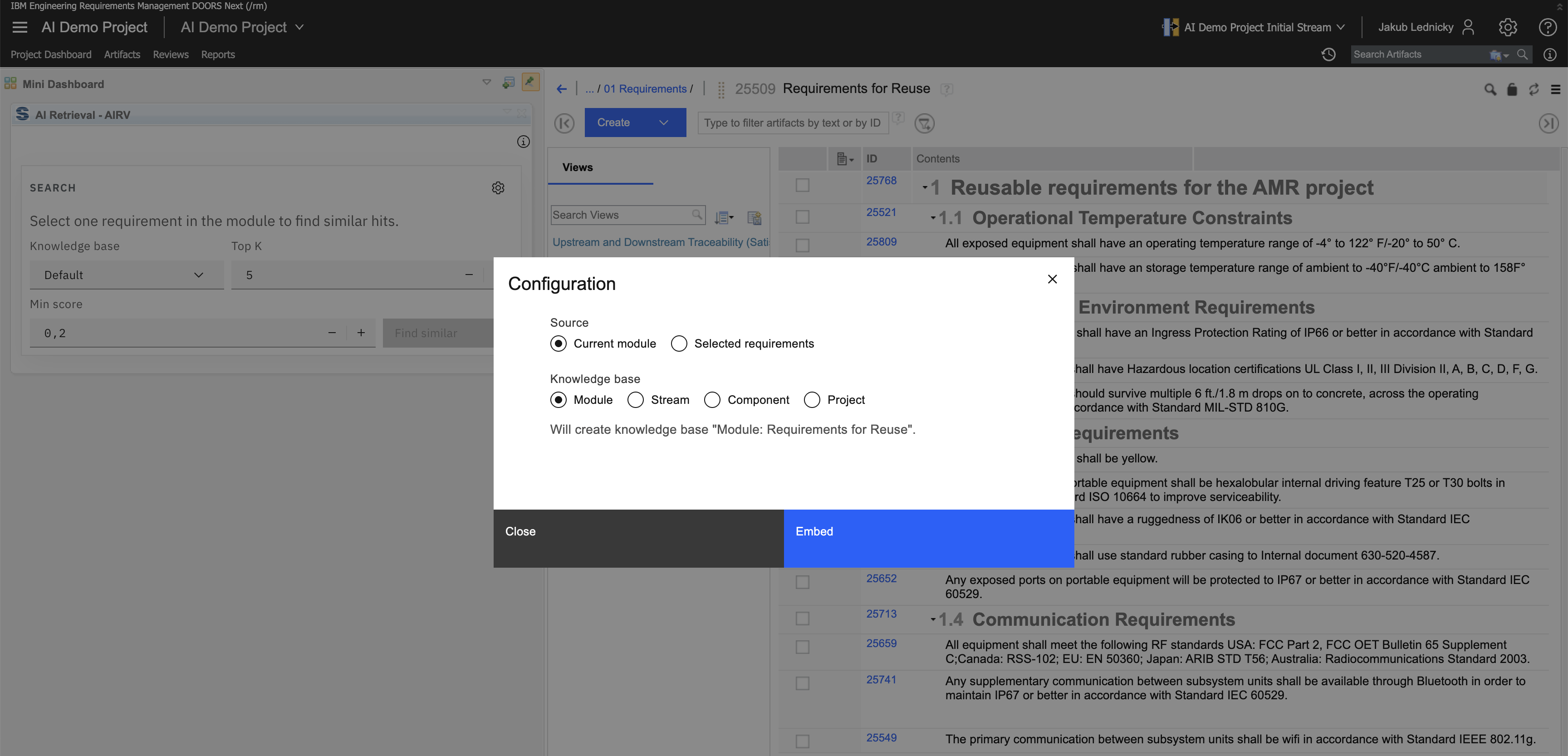
Supports creating custom knowledge bases from:
- ELM modules and other structured content
- Documents: PDF, Word, Excel, PowerPoint, HTML, TXT, and Markdown
Knowledge bases can be scoped to different ELM contexts, including projects, components, configurations, and modules.
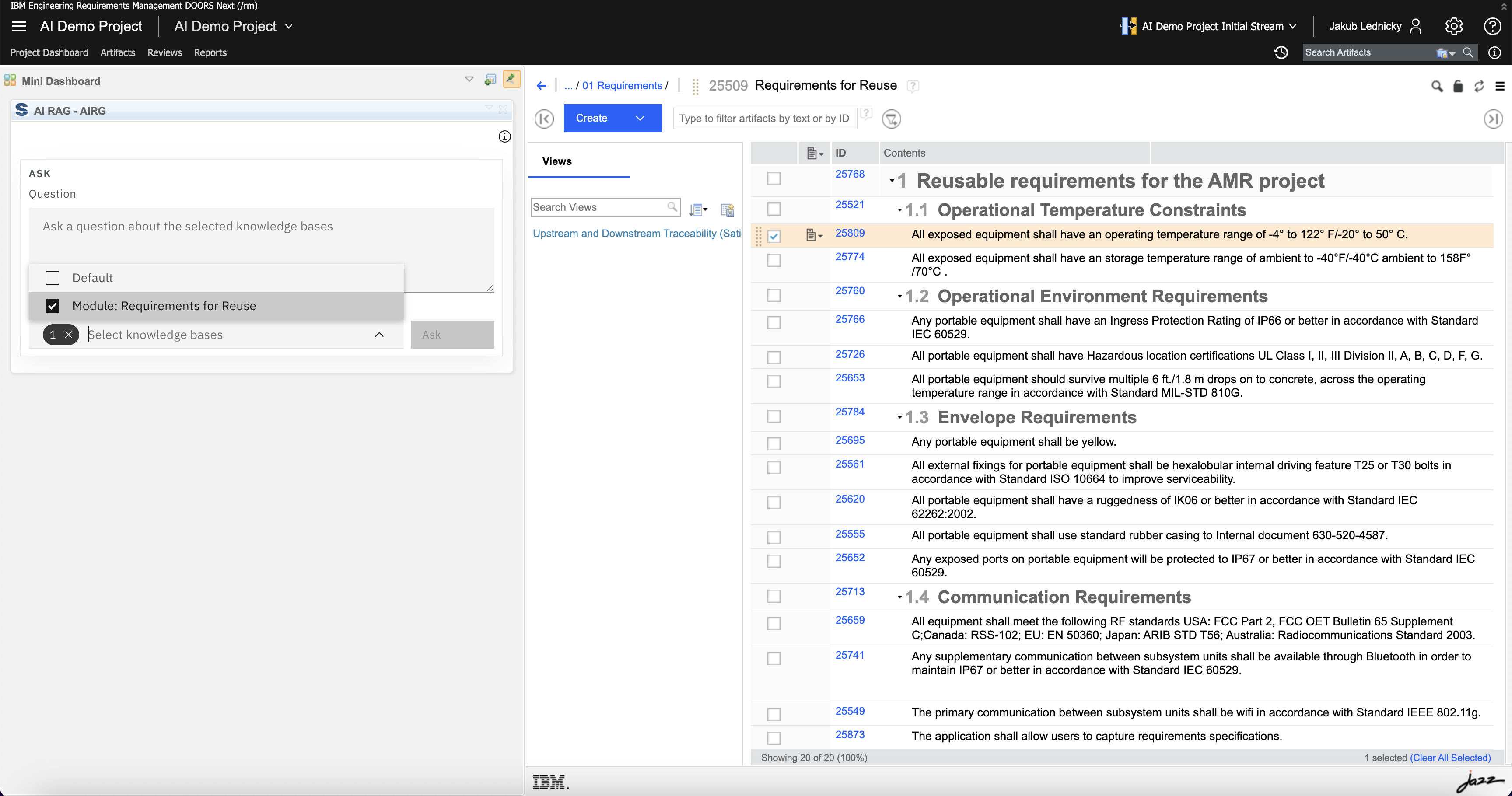
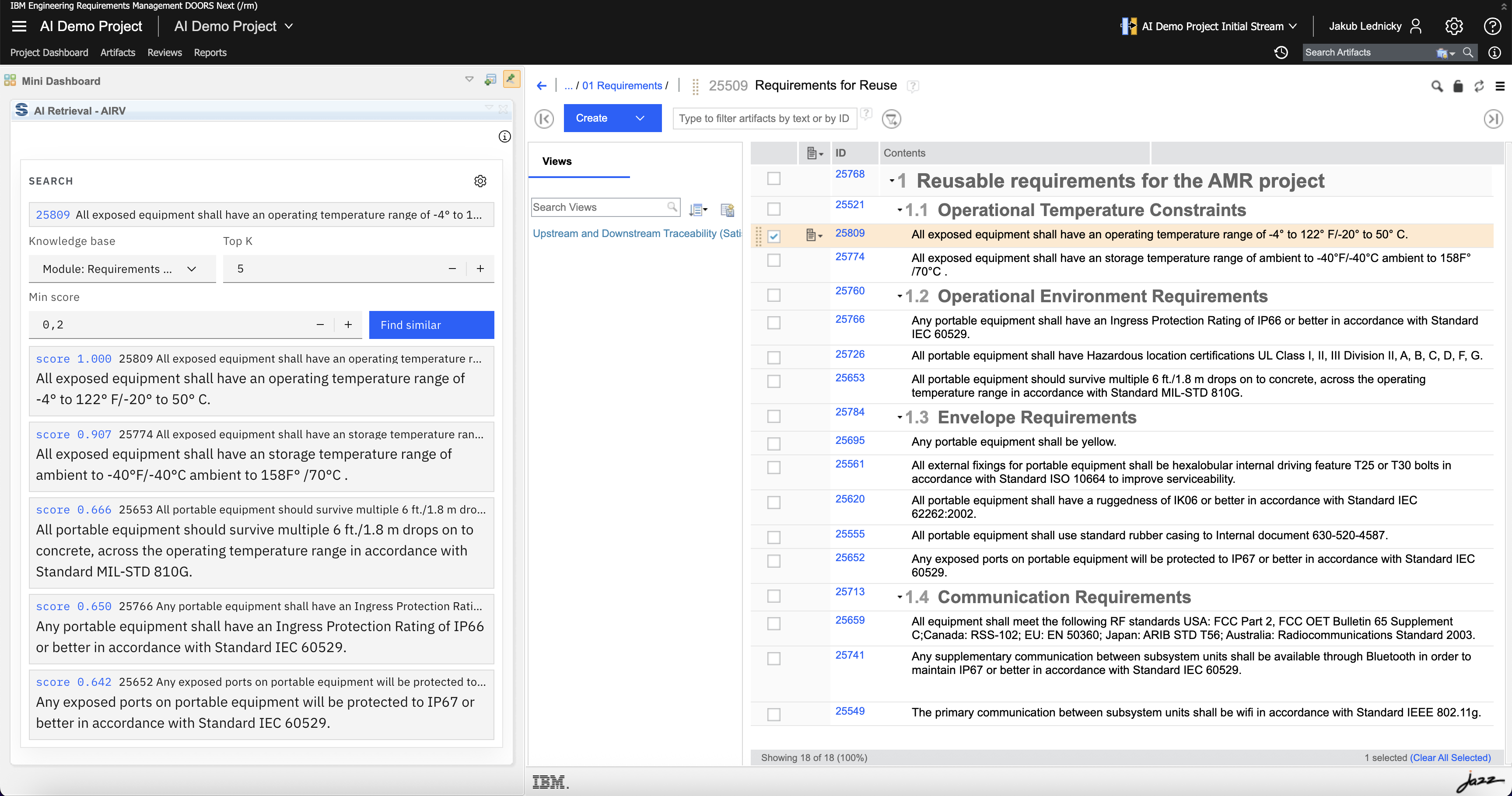
Retrieval-Augmented Generation (RAG)
AI agents combine Retrieval-Augmented Generation (RAG), vector search, and knowledge graphs to analyze, generate, and validate requirements at scale.
Key capabilities:
- Detect duplicates, conflicts, and inconsistencies
- Perform automated impact and dependency analysis
- Generate requirements and test cases from specifications
- Ensure compliance and traceability (including safety-critical requirements)
PDF & Data Extraction
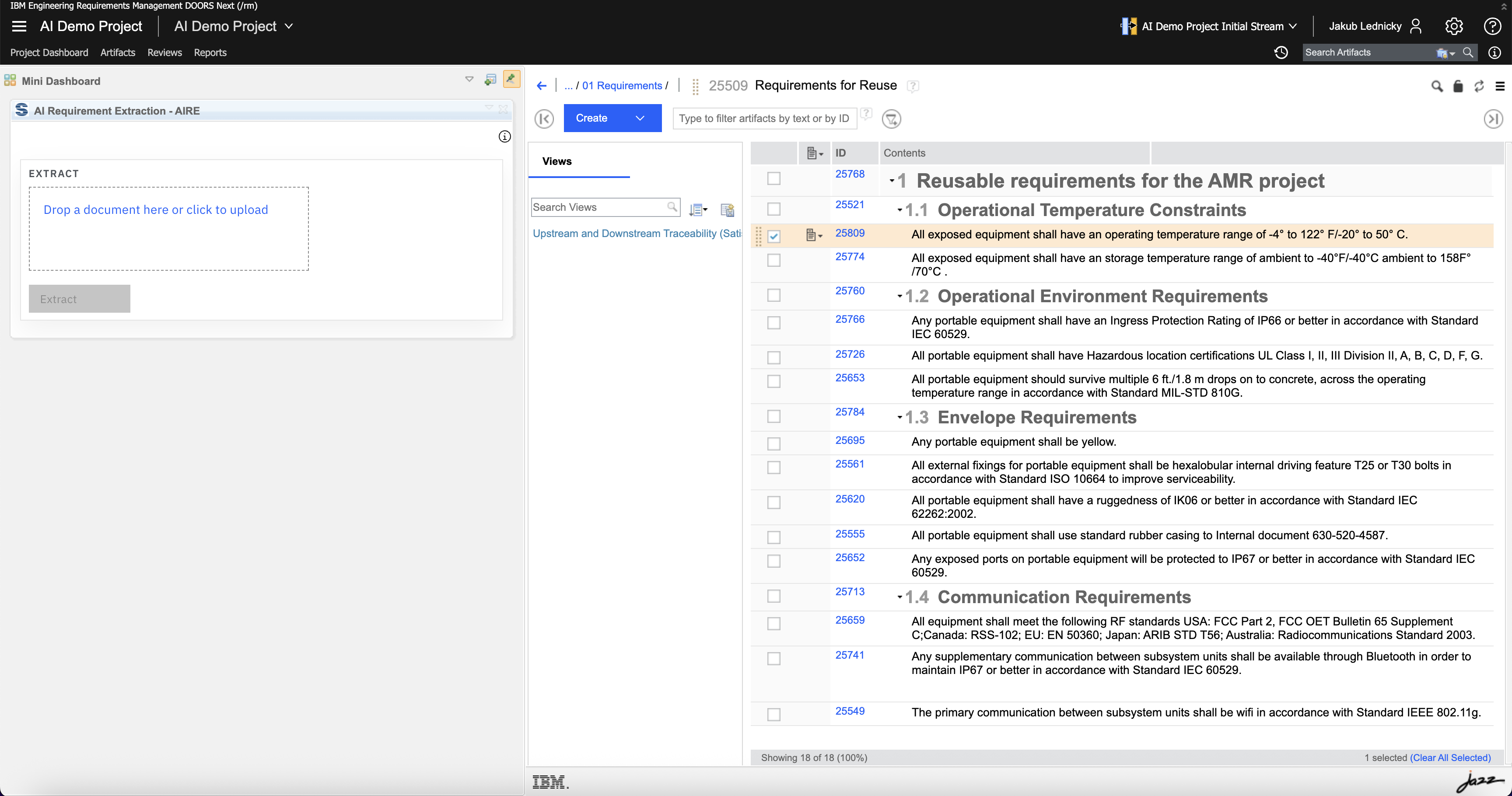
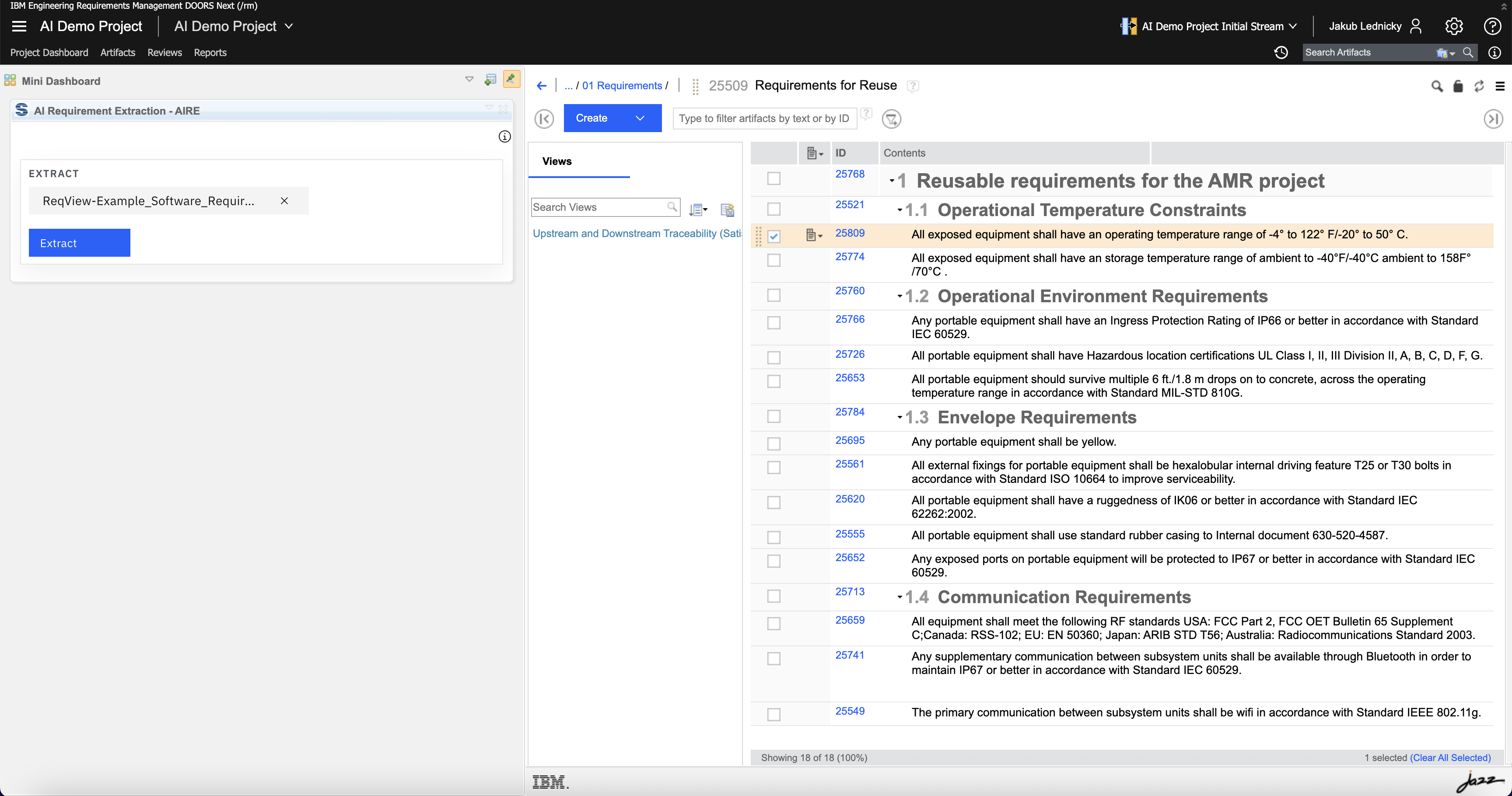
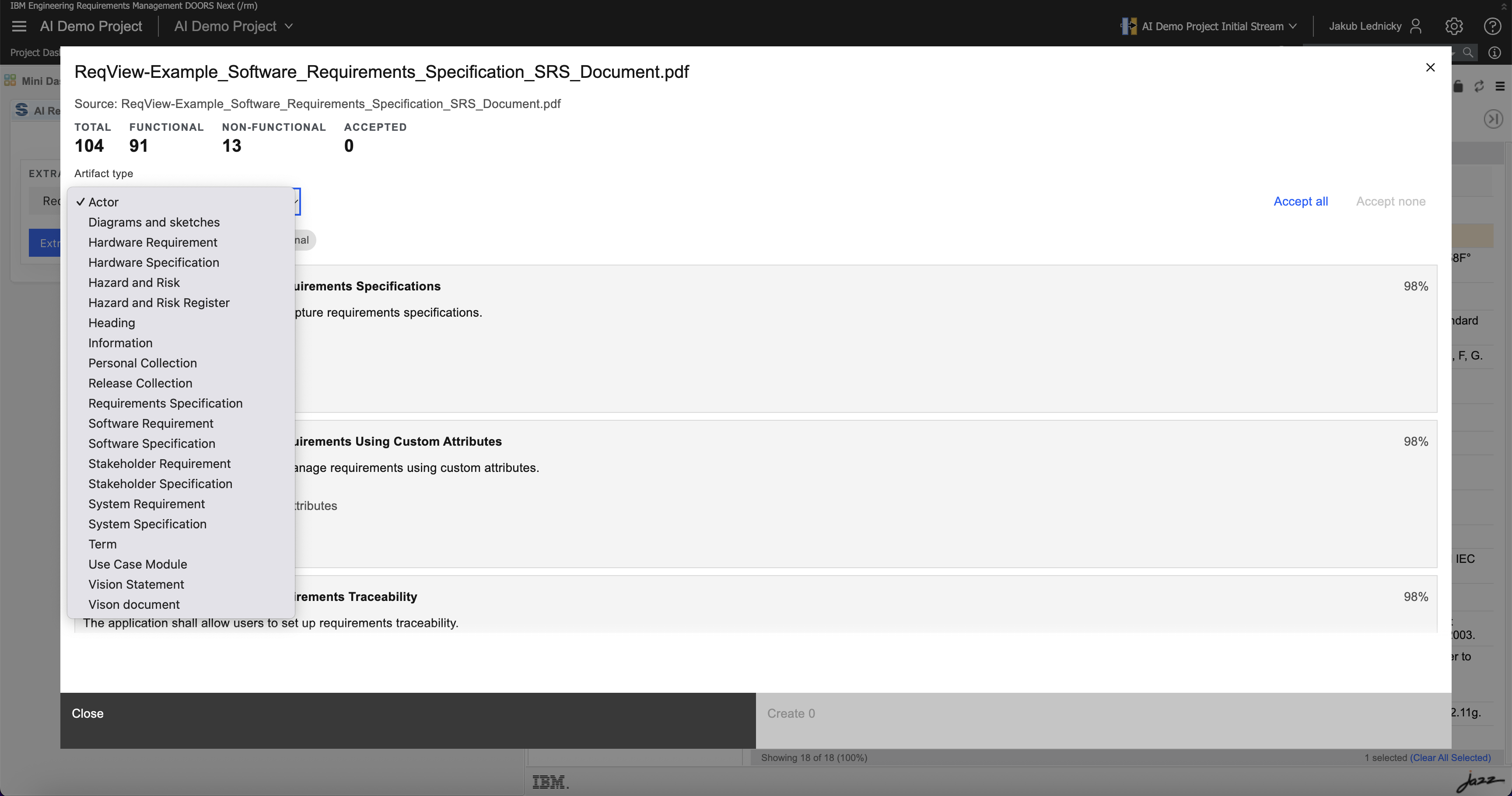
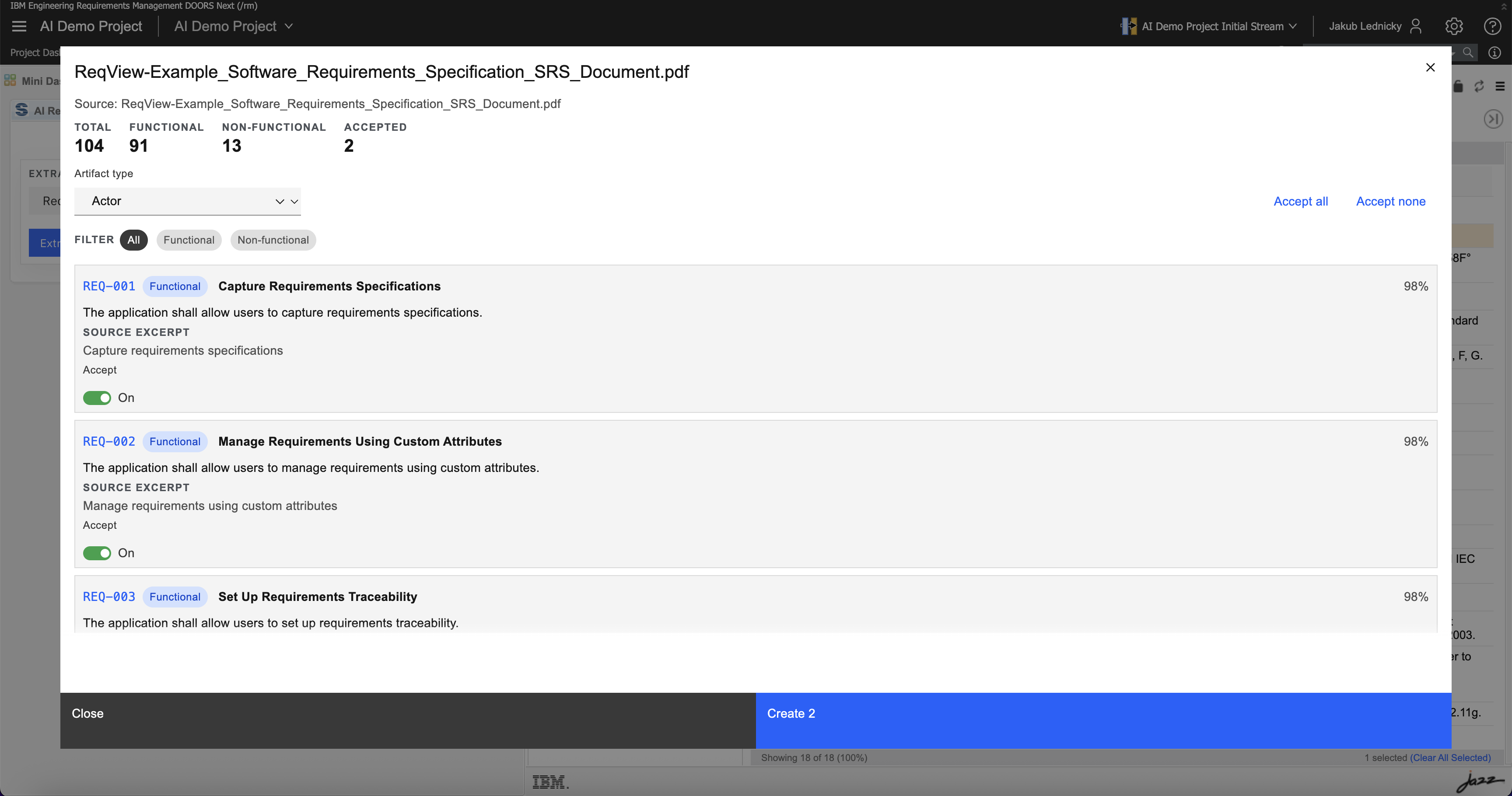
- Automatic requirements extraction from documents, including PDF, Word, Excel, PowerPoint, HTML, TXT, and Markdown.
- Extracted requirements can be automatically categorized into functional and non-functional requirements.
- Users can review and select which extracted requirements they want to create in ELM.
- Users can choose the target module location and structure where the requirements should be created.
- Users can also select a custom artifact type for the created requirements.
Dependency / Impact analysis
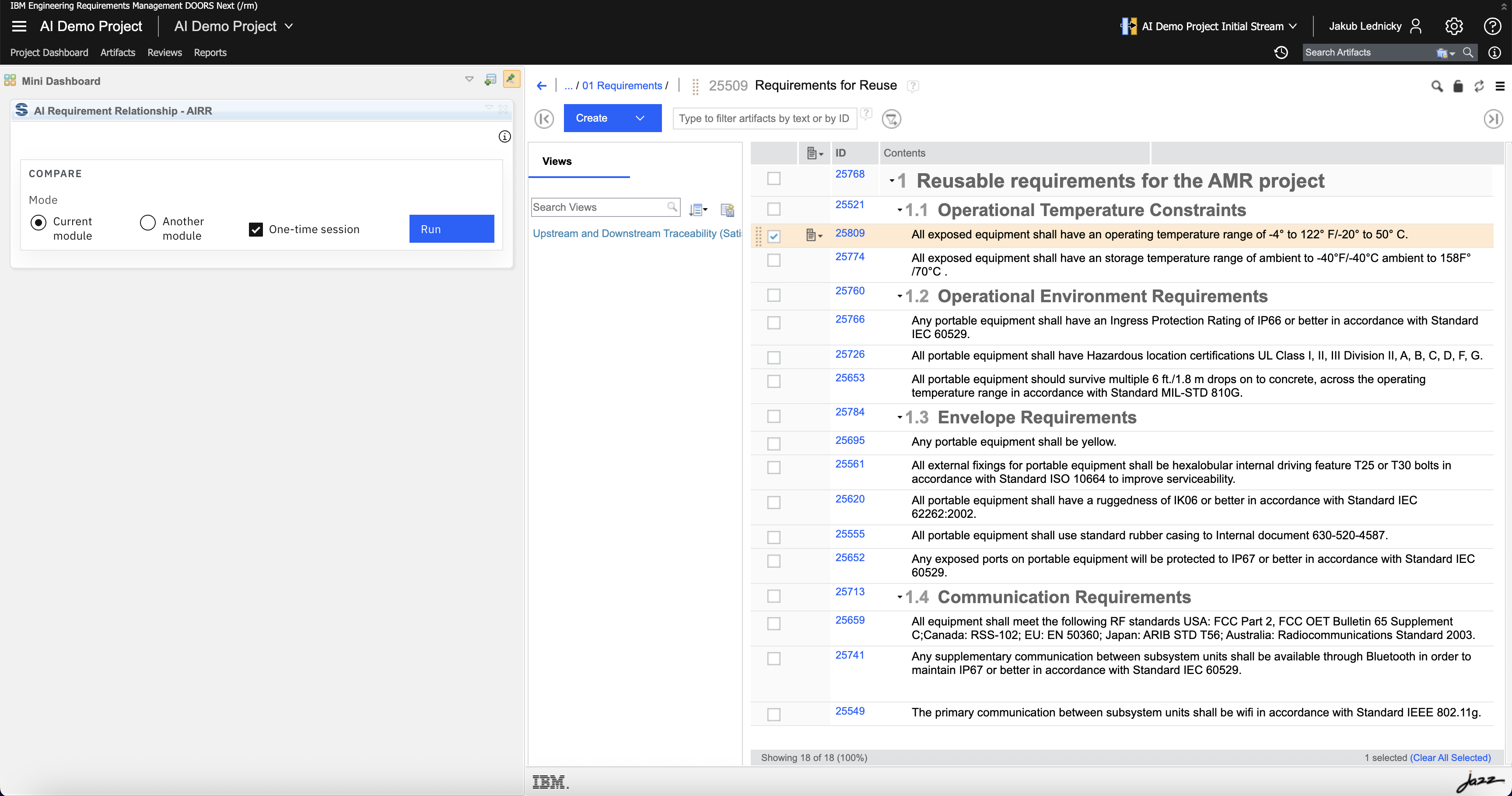
Analyze dependencies
AI-based dependency analysis automatically identifies and visualizes relationships between requirements. This enables faster impact assessment and more informed decision-making when changes occur. The AI agent can analyze the requirement:
- Checking for similarities in the vector store (duplicate and similarity detection; semantic search).
- Checking in the knowledge graph for an impact analysis (consistency and compliance checks).
- Rapidly identifying similarities, duplicates, or conflicts within extensive sets of requirements.
Requirements Generation
Transformation of the entered requirement based on the selected sentence templates. AI reduces document creation time and helps developers formulate high-quality requirements more quickly.
PDF & Data Extraction
Requirements can be extracted, converted, and classified from a variety of sources, including PDFs, documents, databases, vector stores, and more.
Duplicates & Similarity
Find duplicates easily even if they are written differently. This helps ensure your data stays clean and consistent across all records.
Tender Management
The solution can help you to answer questions from an RPF (Request for Proposal). This allows you to make the right decisions faster.

AI for Rhapsody & Rhapsody SE
IBM Engineering Systems Design
MBSE use case discovery
Create your own database objects and display them exactly the way your business needs. Whether you manage customers, technical assets, requirements, risks, products, or any other structured information, you define the data model, fields, and relationships.

Accelerate the analysis of requirements
Move faster into the RFLP (requirements, functional, logical, physical) framework.
Improve traceability by auto-linking requirements to generated model elements.
Reduce the effort spent on manual tasks to get started

AI for EWM
IBM Engineering Workflow Management
Work Item Synopsis
Generate concise synopses of complex, long-running tasks, defects, features, and other work items, highlighting context, key details, status, working notes, and risks.
By avoiding the need to scan lengthy descriptions, comments, etc., engineers and managers can:
Work Item Synopsis is an agent designed to handle the complexity of long-running tasks, defects, and features.
In large projects, work items often span weeks or months, accumulating dozens or even hundreds of comments, updates, and status changes.
The agent generates concise, readable summaries that highlight key context and objectives, current status and progress, risks and blockers, and important notes and decisions.
This helps to:
- Improve team productivity and communication across teams, reducing the need for status meetings and manual updates
- Accelerate workflow through smoother handoffs, making engineering processes more fluid and transparent
- Reduce ramp-up time when switching tasks or joining new initiatives
- Provide managers with clearer visibility into ongoing work, enabling faster and more informed decisions
Ultimately, it improves team efficiency by saving time, surfacing patterns, and identifying risks or dependencies early.


AI for ETM
IBM Engineering Test Management
AI based Test Case Generation
AI-based Test Case Automation accelerates the creation and maintenance of test cases by generating them directly from requirements and system specifications. It ensures better coverage and consistency while reducing manual effort in test design. By continuously aligning tests with evolving requirements, it helps teams improve quality and speed up validation cycles.
- Automatically generate test cases from requirements and changes
- Improve coverage and traceability between requirements and tests
- Reduce manual effort and accelerate testing cycles
Softacus AI Engineering Services
Softacus AI Engineering Services is a set of AI tools and services that help automate repetitive, time-consuming engineering tasks, freeing engineers to focus more on creative works, solving problems, and delivering complex, mission-critical, secure systems and software faster.
Supporting Platforms
To fully leverage AI in engineering environments, a strong foundation is required — both in terms of structured knowledge and flexible workflows.
- ELM Wiki provides a structured knowledge layer, enabling teams to manage engineering documentation in context and create a reliable basis for AI-driven insights.
- Elwis App enables the creation of custom applications and workflows, allowing organizations to operationalize processes and integrate AI capabilities directly into their daily work.
Together, these platforms support a more connected, scalable, and efficient engineering environment.
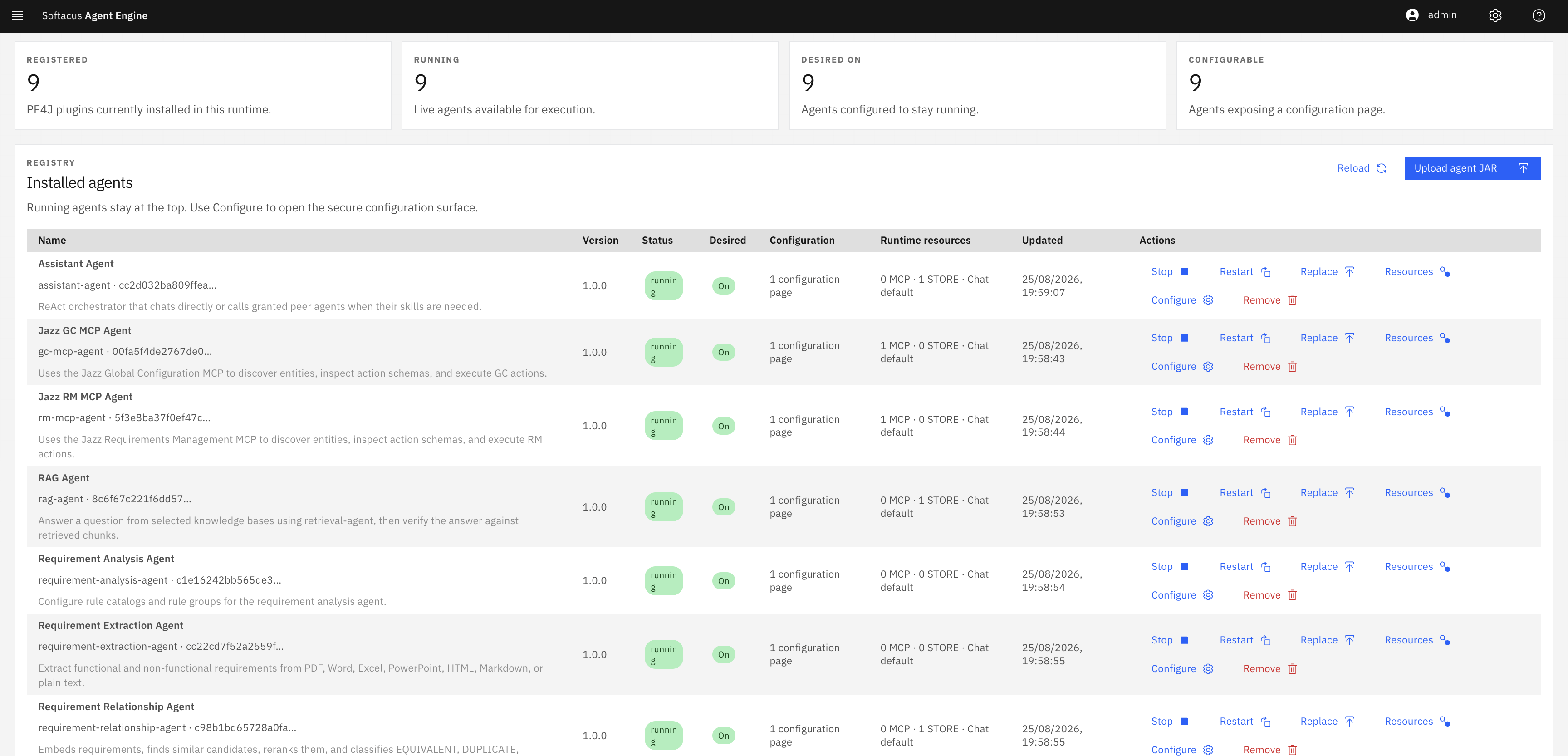
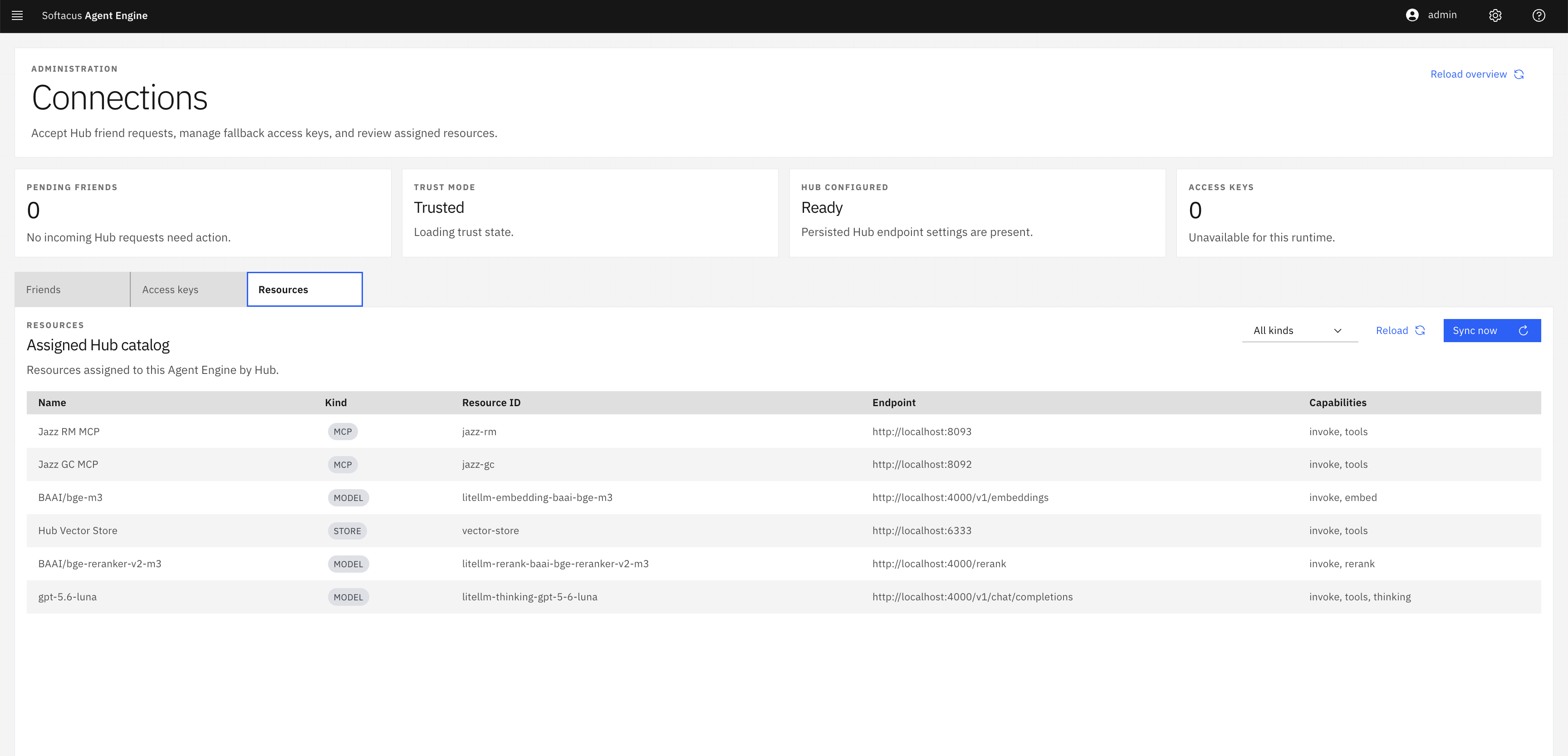
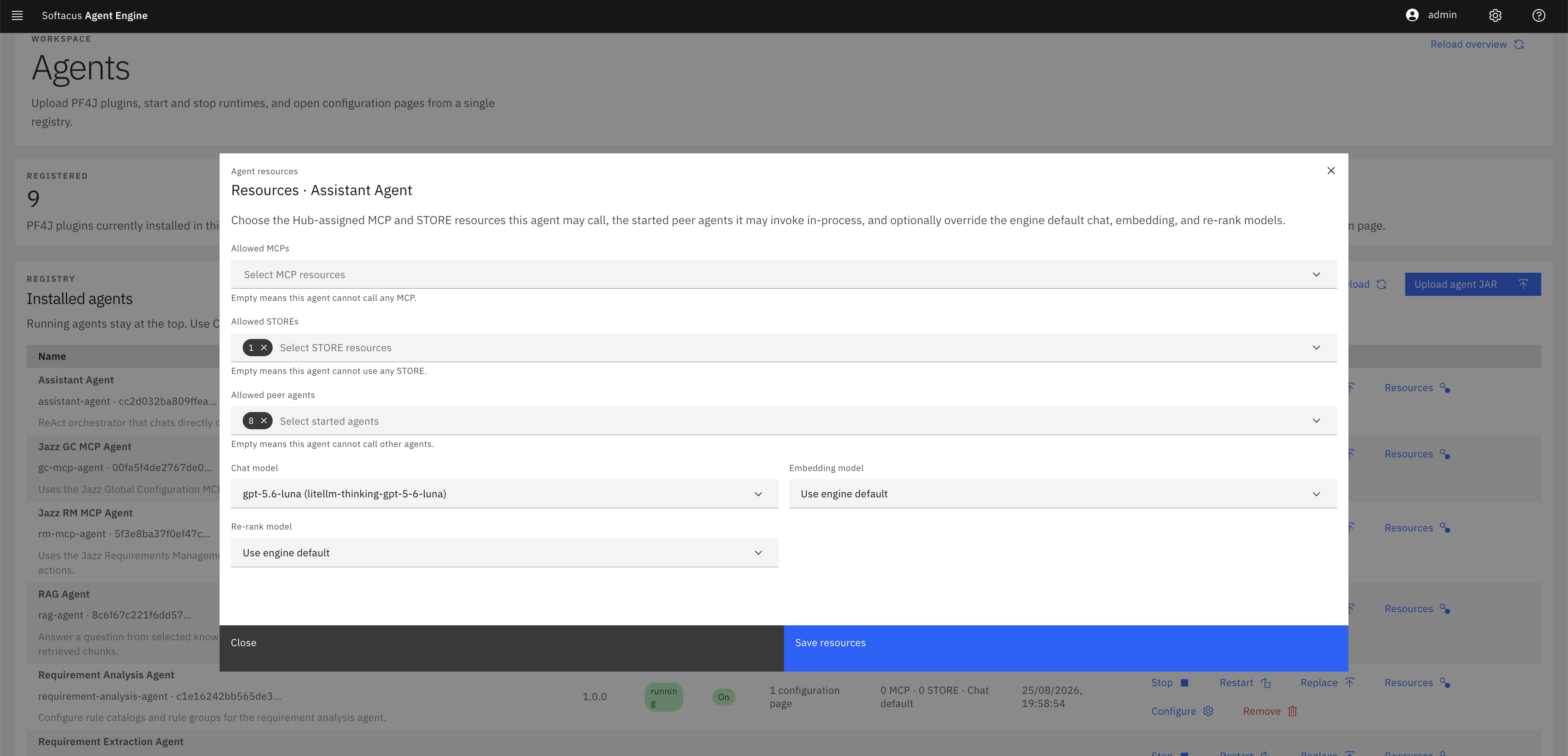
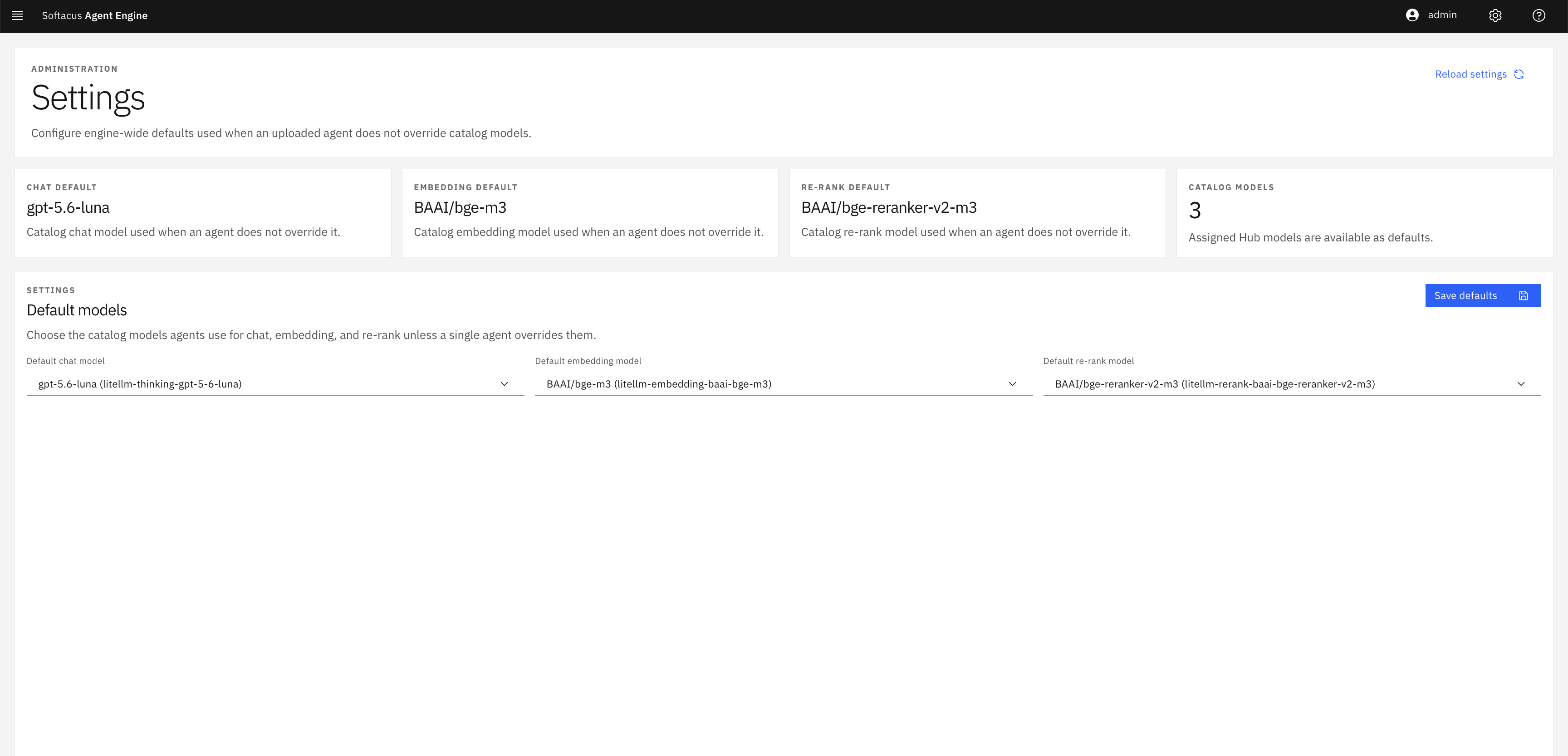
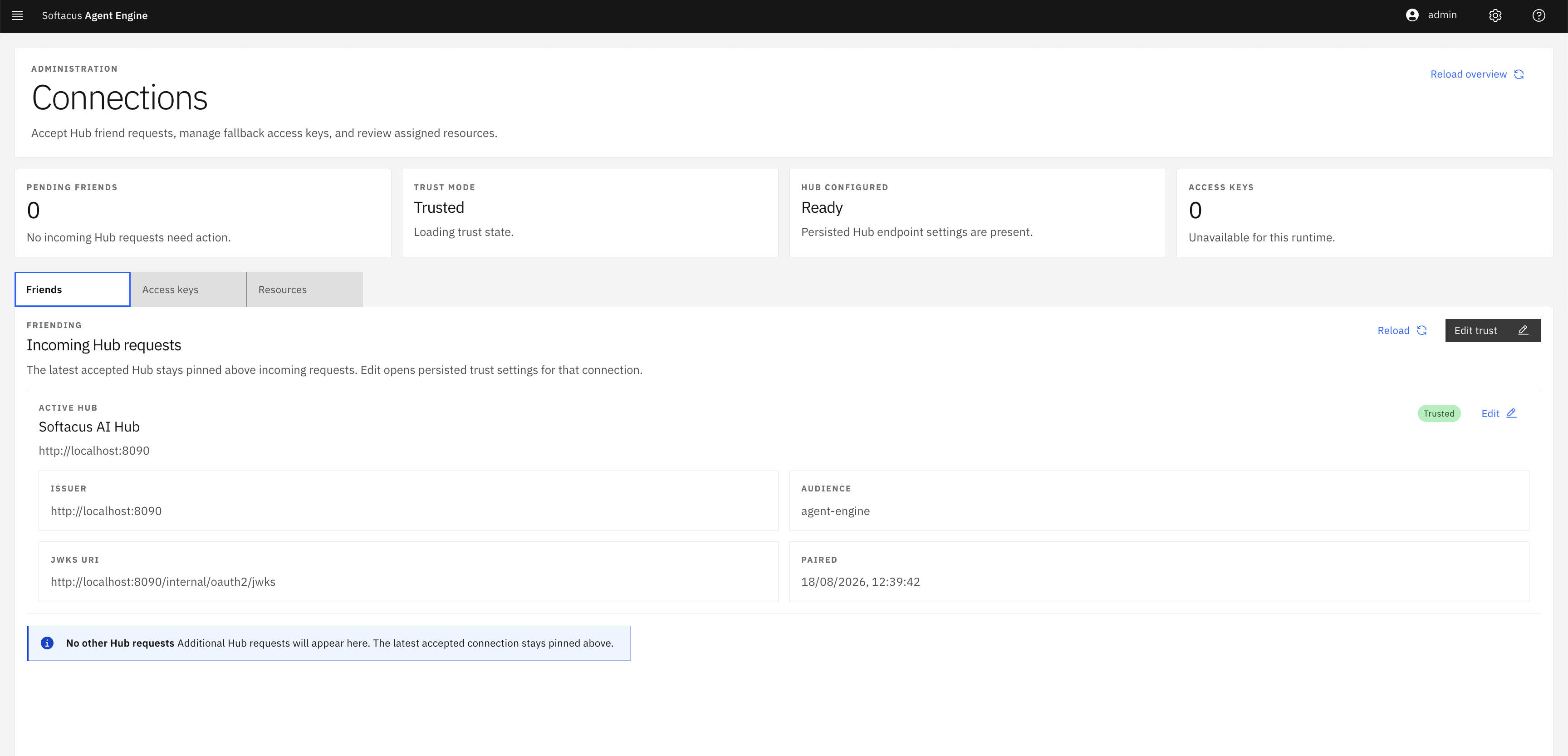
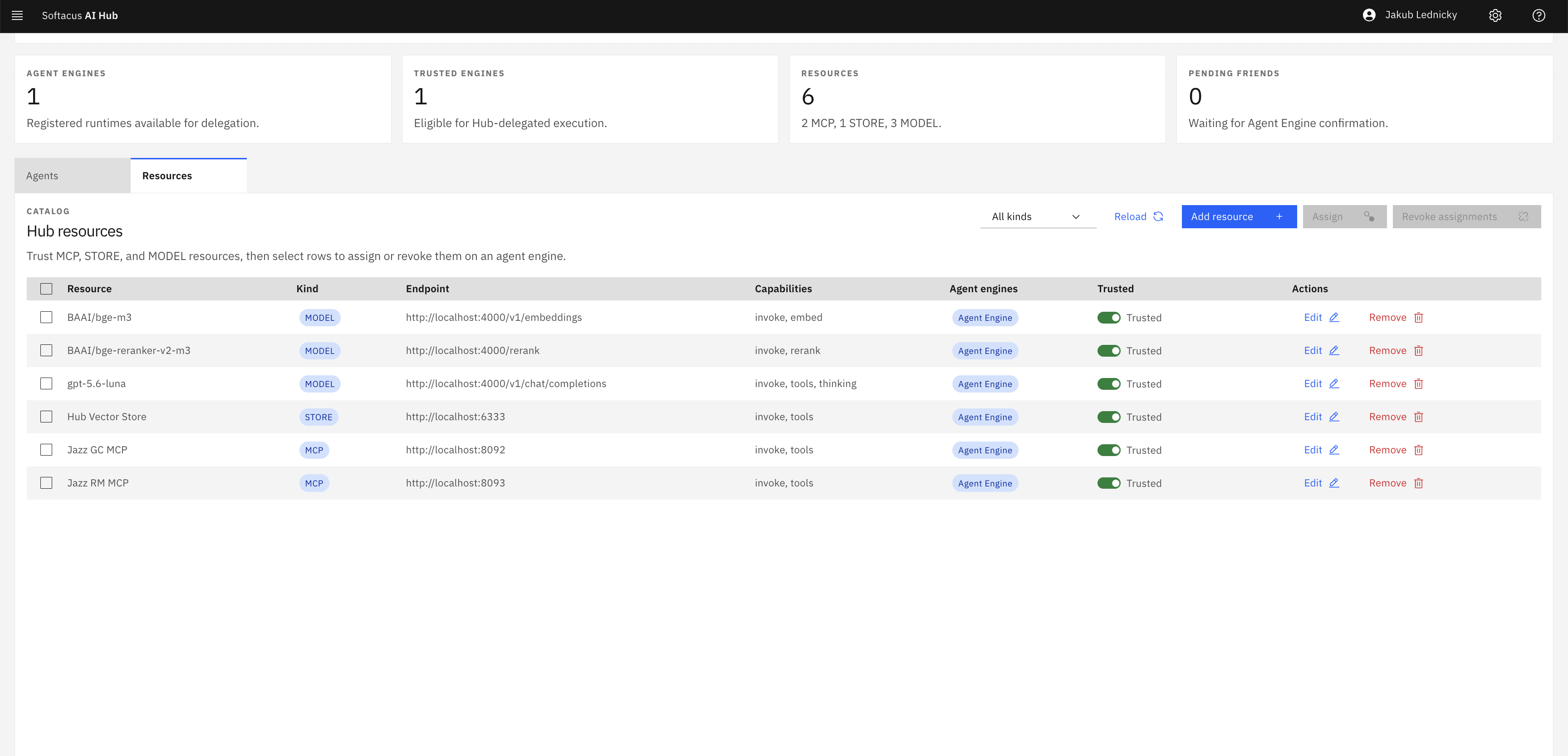
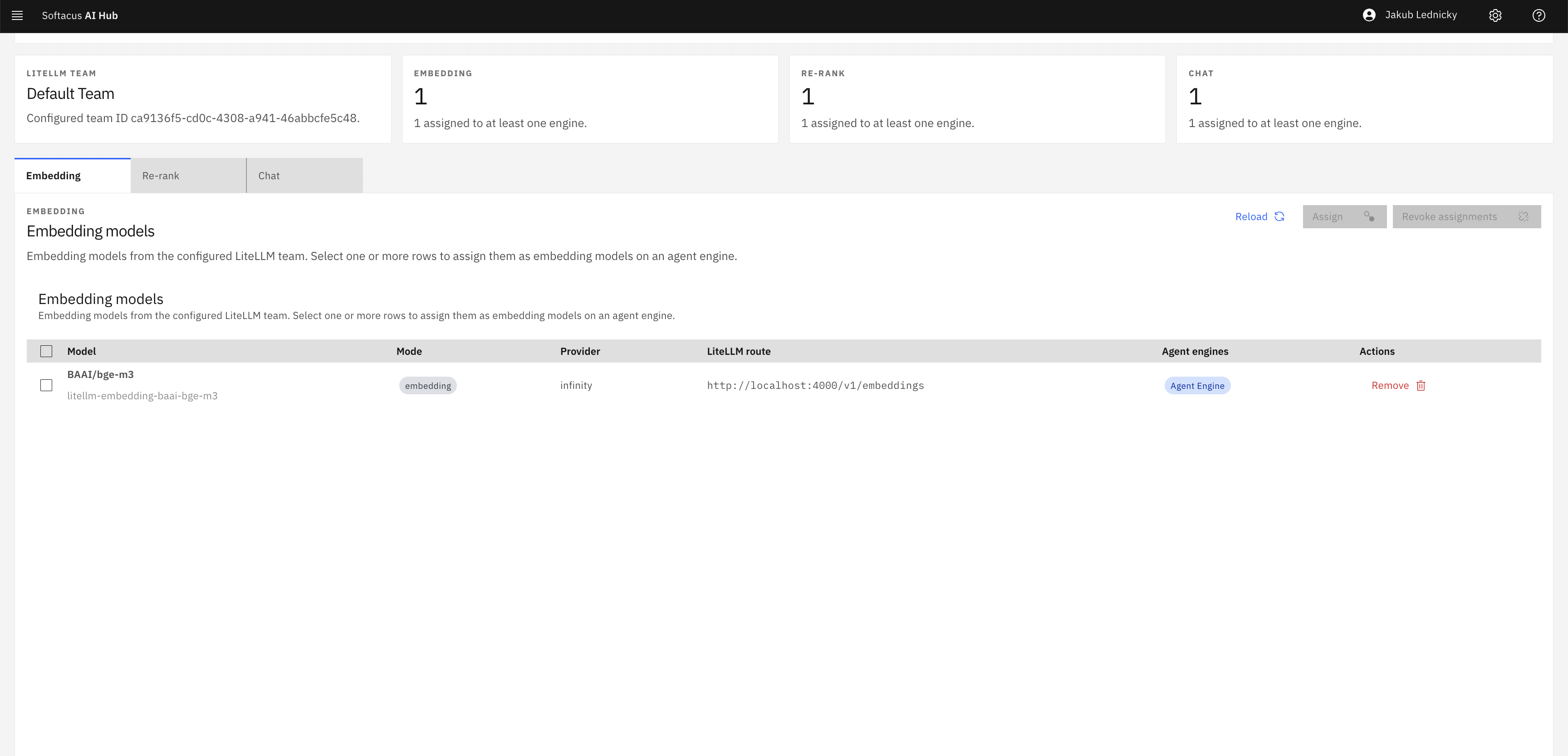
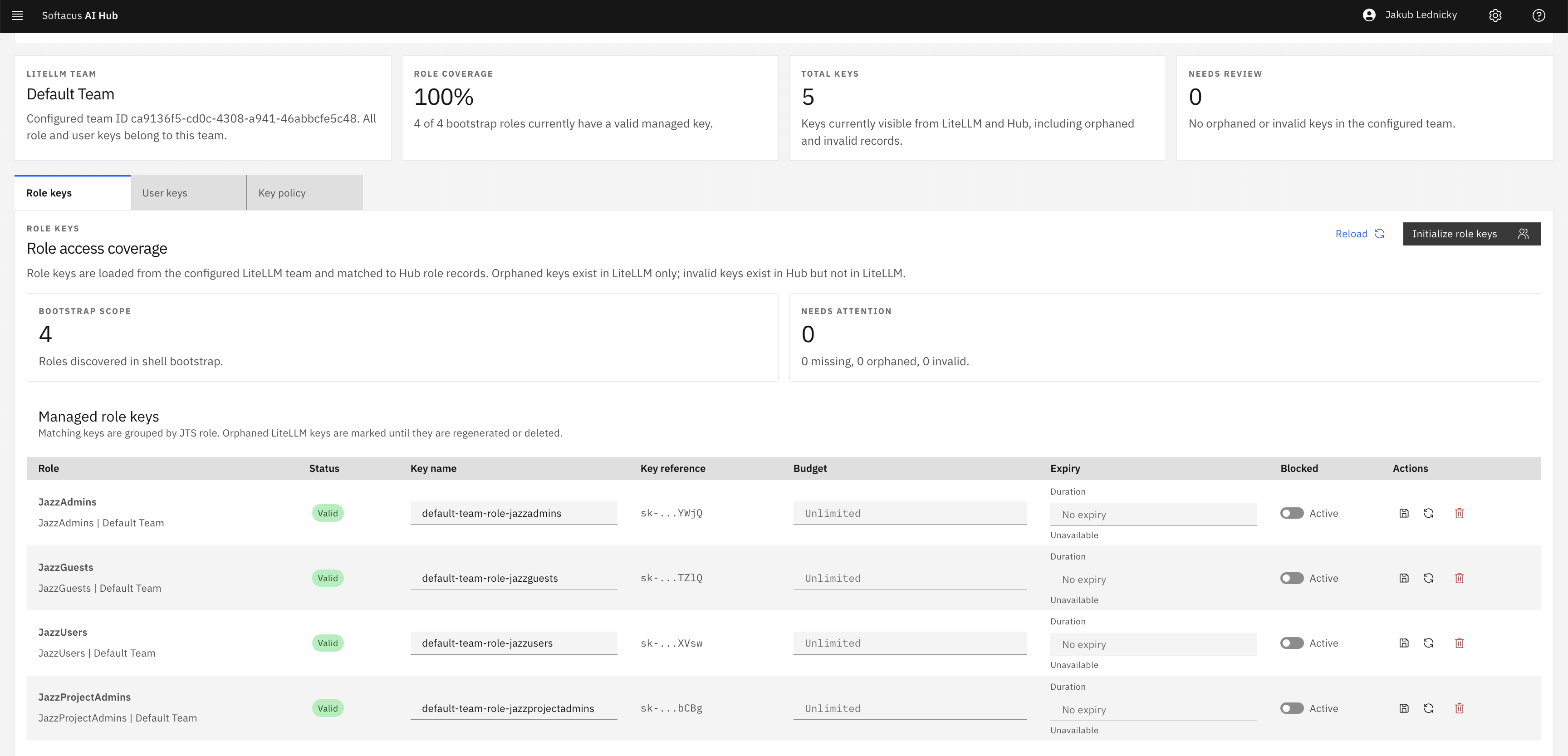
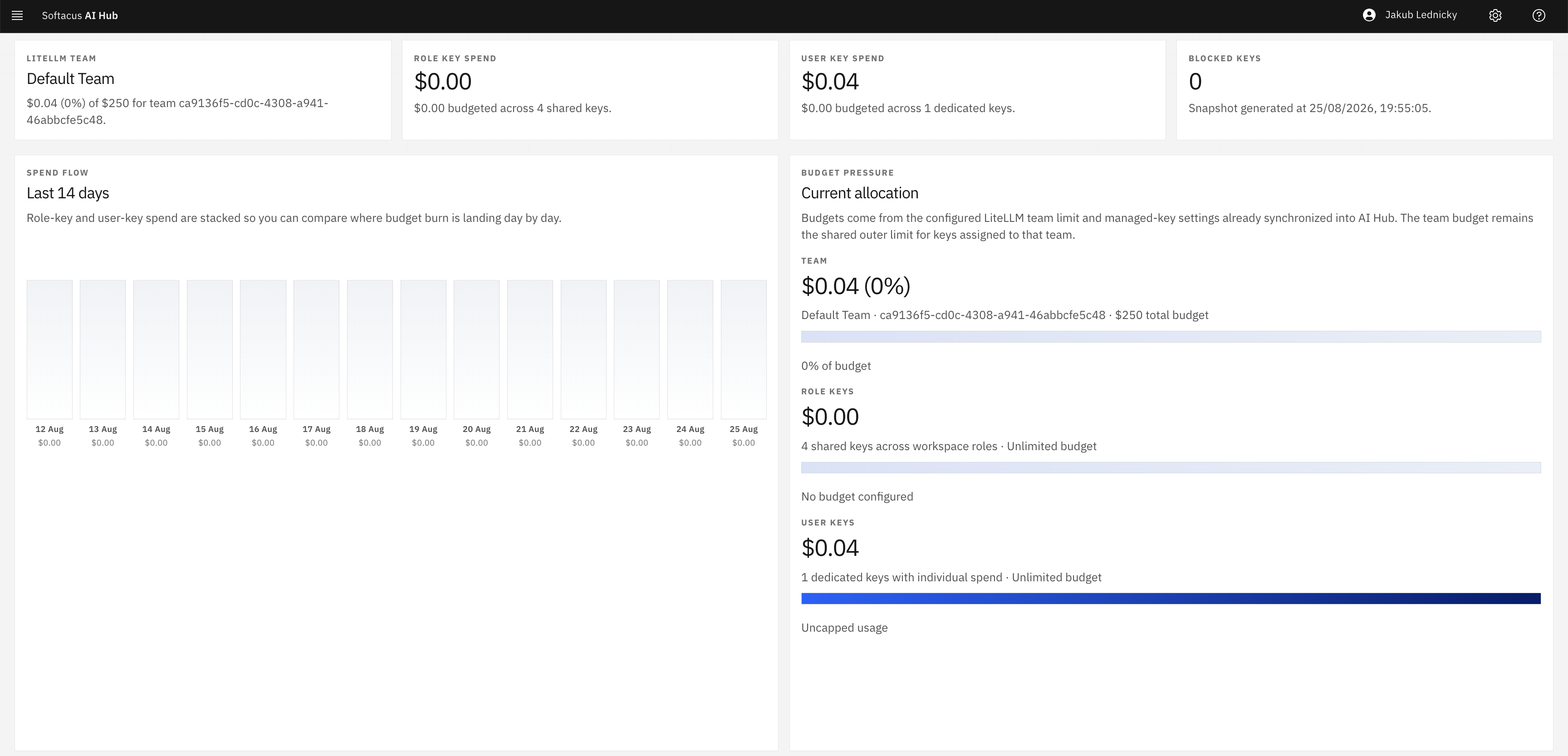
Agent Engine & AI Hub admin
Various AI Models & technologies
Leverage switchable AI models that can be dynamically selected or combined based on the task or agent,
ensuring optimal performance, flexibility, and control. This allows you to adapt processing strategies on demand. The platform supports 100+ LLMs, including both cloud-hosted and locally hosted models.
Examples:
Gemma4, gemma4moe, Granite, llama, Qwen, Chatgpt120, Mistral.
Flexible technology:
Pinedb, n8n, qdrant, postgre, redis litellm, sprak dgx, nvidia4090, vectorDB, VectorStores, FalkorDB.
LLM serving: vLLM, Ollama
Embedding / inference: Infinity
Databases: PostgreSQL, DB2, MongoDB
Vector stores: Qdrant and additional vector-store technologies
Knowledge graphs: Neo4j and other graph databases
Infrastructure: NVIDIA, Docker
Additional integrations: other vector stores, databases, model-hosting platforms, and LLM providers
Cloud & Onsite deployment
Select the deployment model that best fits your security and compliance needs. Whether SaaS or on-premise.
Deploy anywhere Saas, Amazon, Microsoft, or your local site (Docker).
SaaS
Some of mentioned use cases can be run as IBM SaaS environment.
Local
Deployed via containerised installation within your on-premise or isolated environment.
Custom
Environment can be deployed in any country on typical Cloud providers. It can be managed by our team or yours.
Pricing
The use cases mentioned are done in a tailored way for a client. The IBM use cases require an IBM AI Hub License. Some of the use cases are performed as service engagement. Please contact us with your use case in order to get more informations.
Get In Touch
+41 43 5087081
jan.jancar@softacus.com
info@softacus.com
Löwenstrasse 20 8001 Zürich Switzerland
Sign up to our newsletter
Stay up to date with the latest news, announcements, and articles.

We are experts when it comes to consulting and service delivery of IBM software products and solutions in your business.
© 2025 Softacus AG
