Why DO-178C Matters in Aircraft Software Systems
In aviation engineering, avionics system software failures can have devastating consequences, ranging from minor malfunctions to severe safety risks. To prevent such outcomes, companies' engineering aircraft systems are obligated to comply with DO-178C, the worldwide accepted aviation software development standard.
If you operate with aviation systems, understanding DO-178C and the purpose of IBM’s Engineering Lifecycle Management (ELM) platform supports companies in meeting their strict requirements. Throughout this article, you'll learn what DO-178C is, why companies are obligated to comply with it, and how IBM ELM tools assist development, planning, and verification activities required by the standard. This overview is designed to enable engineers, managers, and newcomers to develop a solid understanding of DO-178C compliance.

What is DO-178C?
DO-178C (Software Considerations in Airborne Systems and Equipment Certification) is the main safety standard for all aviation software systems used in aircraft. It establishes the processes, documentation, objectives, and confirmation necessary to verify that the aircraft's aviation software is dependable and secure enough to be implemented on certified aircraft systems.
How DO-178C Is Demonstrated
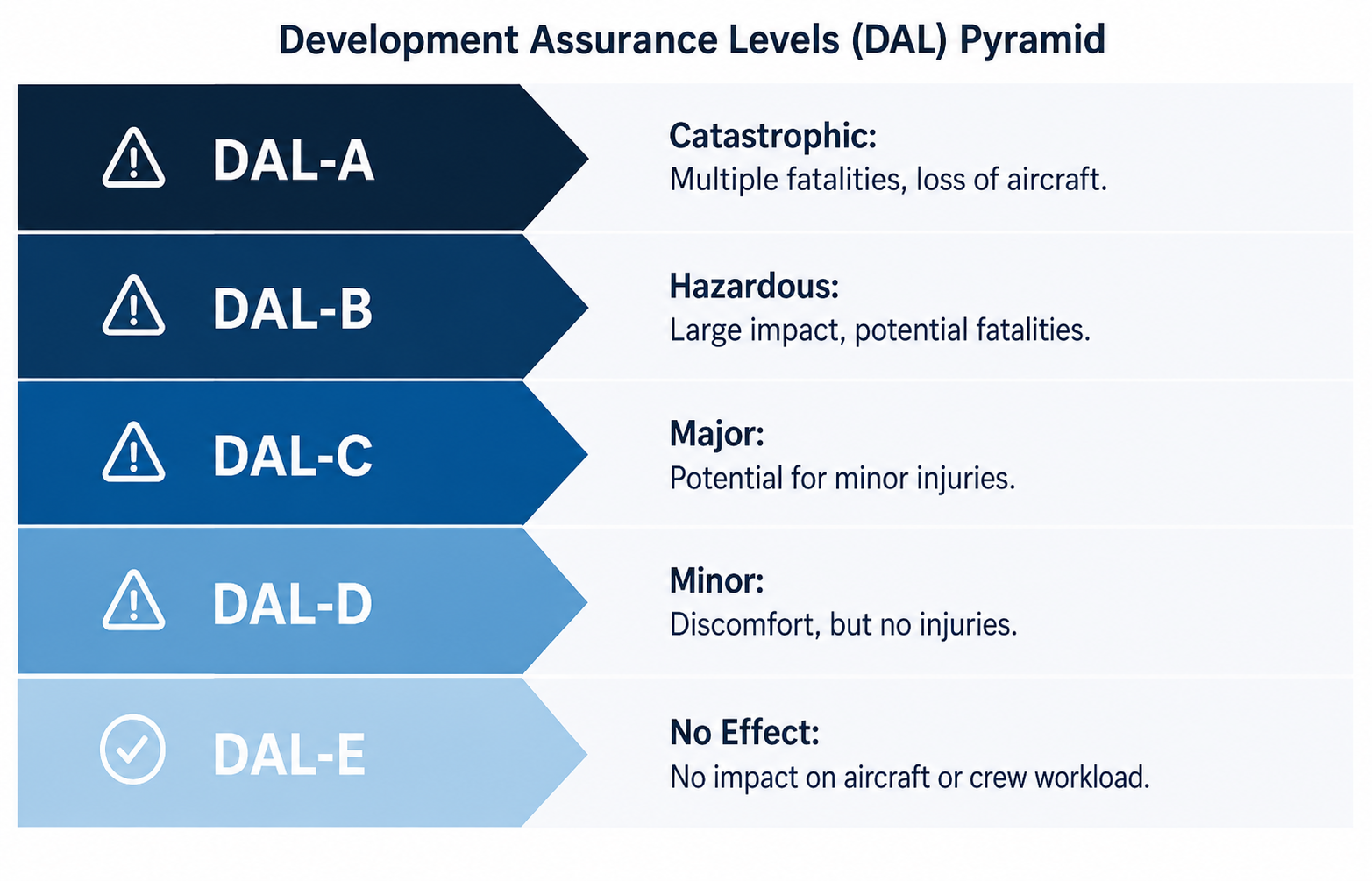
The standard defines the procedures, evidence, and controls needed across the software lifecycle. This includes software development and verification procedures, traceability expectations, required documentation, and the Design Assurance Levels from DAL A to DAL E.
These levels reflect the potential safety impact of a software failure. DAL A applies to the most severe failure conditions, while DAL E applies when a failure has no safety effect. The higher the criticality level, the more rigorous the development, verification, and documentation requirements become.
Why Companies Must Use DO-178C
Aviation authorities such as the FAA in the United States and EASA in Europe use DO-178C as a key reference when assessing whether airborne software can be certified.
Organizations follow DO-178C because it provides a recognized framework for developing software that is safe, reliable, and predictable in aviation environments. It helps reduce the risk of severe failures, creates consistency across development and verification activities, and gives certification teams the documentation and objective evidence they need to assess compliance.
Without clear DO-178C-aligned evidence, certifying airborne software becomes extremely difficult. The standard gives teams a structured way to show that the software was planned, developed, verified, controlled, and reviewed with the right level of rigor for its safety impact.
How IBM Assists DO-178C Compliance
IBM Engineering Lifecycle Management, or IBM ELM, provides a connected set of tools that helps organizations manage the procedures and evidence required by DO-178C. Instead of handling requirements, workflows, verification, configuration, changes, tests, and certification evidence in separate places, teams can manage these activities in one integrated lifecycle environment.
This matters because successful certification depends on more than producing documents at the end of a project. Teams need to show how requirements were controlled, how changes were managed, how verification was performed, which baselines were used, and what evidence supports each compliance claim.
By connecting these activities, IBM ELM helps reduce traceability gaps, improve process control, and make certification evidence easier to prepare and defend.

What is IBM ELM?
IBM Engineering Lifecycle Management (ELM) is an integrated toolchain that assists the entire systems and software development lifecycle. It is universally applied to regulated industries, including aerospace, automotive, and defence.
📖 Learn more about ELM on our Aerospace & Defence Solutions page
Core components utilized for DO-178C projects:
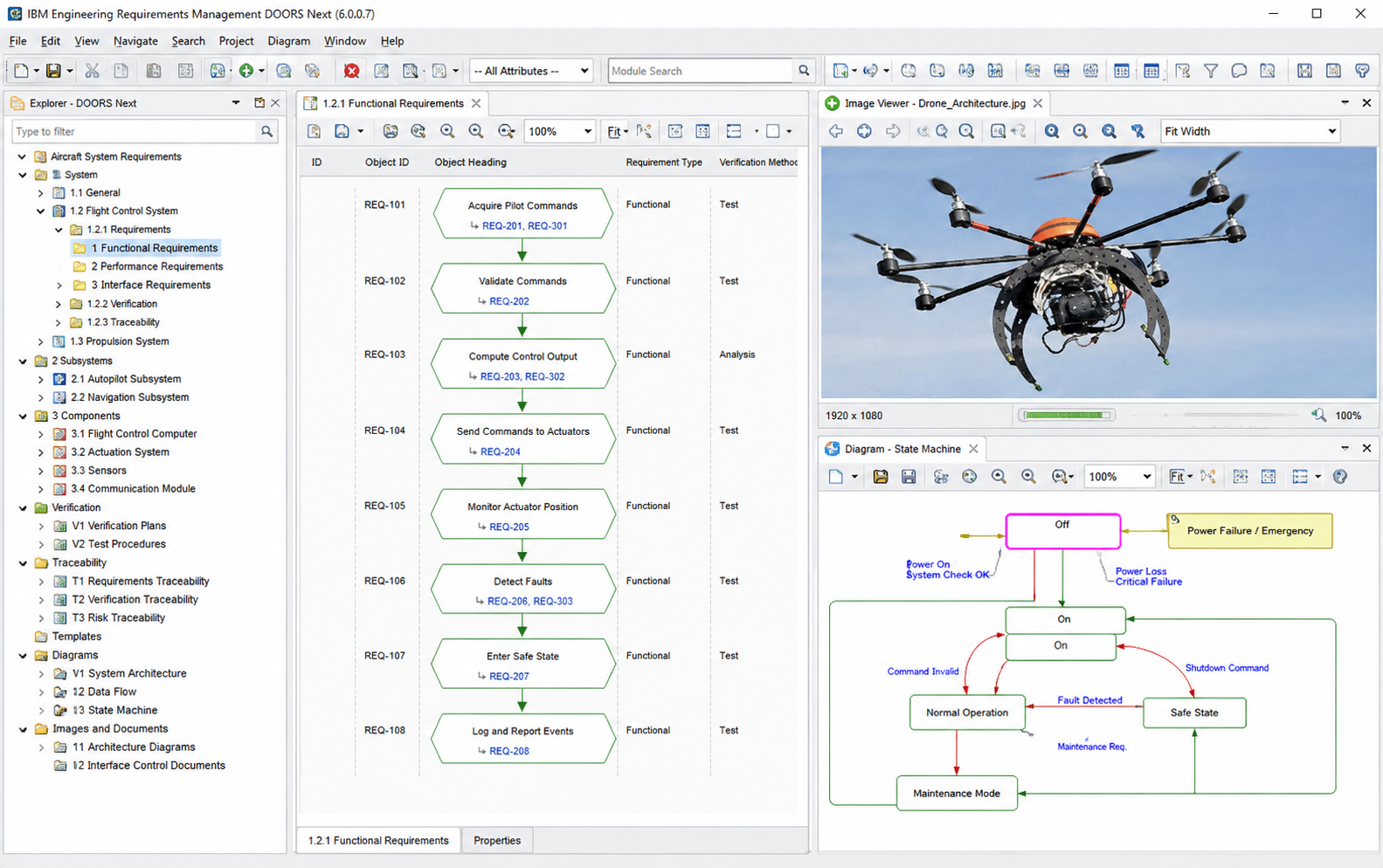
IBM DOORS Next - Requirements Management (DNG)
● Captures and structures system and software requirements
● Creates traceability among requirements, design, code, and tests
● Enables baselining, reviews, approvals, and version control
● Ensures consistency throughout large engineering departments
IBM Engineering Test Management (ETM)
● Generates and executes test plans, test cases, and test scripts
● Records verification documentation
● Connects test results to requirements
● Ensures complete coverage and compliance for audits
IBM Engineering Workflow Management (EWM)
● Manage tasks, change requests, builds, and source control
● Tracks code changes and reviews
● Ensures compliance with configuration management requirements
IBM Rhapsody Systems Design (Rhapsody)
● A modeling environment for SysML/UML
● Helps design system architecture and software components
● Capable of generating executable code directly from the software model for the target environment
● Provides safety-critical frameworks (OXF/SFX) for embedded software development on RealTime
● Operating Systems (RTOS)
● Integrated with DNG and ETM for end-to-end traceability
IBM Rhapsody Test Conductor Add-on (RTC)
● Automates the testing activities required to verify that the executable object code complies with high-level and low-level requirements.
● Automatically collects coverage data during test execution, essential for meeting DO-178C objectives regarding code structure.
● Prequalified testing tool, including a “Validation Suite” for further qualifications
Global Configuration Management (GCM)
● Handles multi-version configurations for effective variant management
● Ensures consistent baselines across requirements, code, tests, and models
● Critical for large avionics programs with multiple system variants
In combination, these tools provide the complete traceability and structure that DO-178C requires.
The Core Elements
DO-178C organizes software development into several core aspects. In this article, the primary components include Planning, Development, and Testing/Verification.
1. Planning
The planning phase establishes how software will be developed, verified, and managed throughout the project in accordance with DO-178C. This includes preparing the Software Development Plan (SDP), Software Verification Plan (SVP), Configuration Management Plan, Quality Assurance Plan, and the overall certification compliance strategy. Together, these documents define the processes, responsibilities, and controls that guide the entire software lifecycle.
How IBM ELM Supports Planning
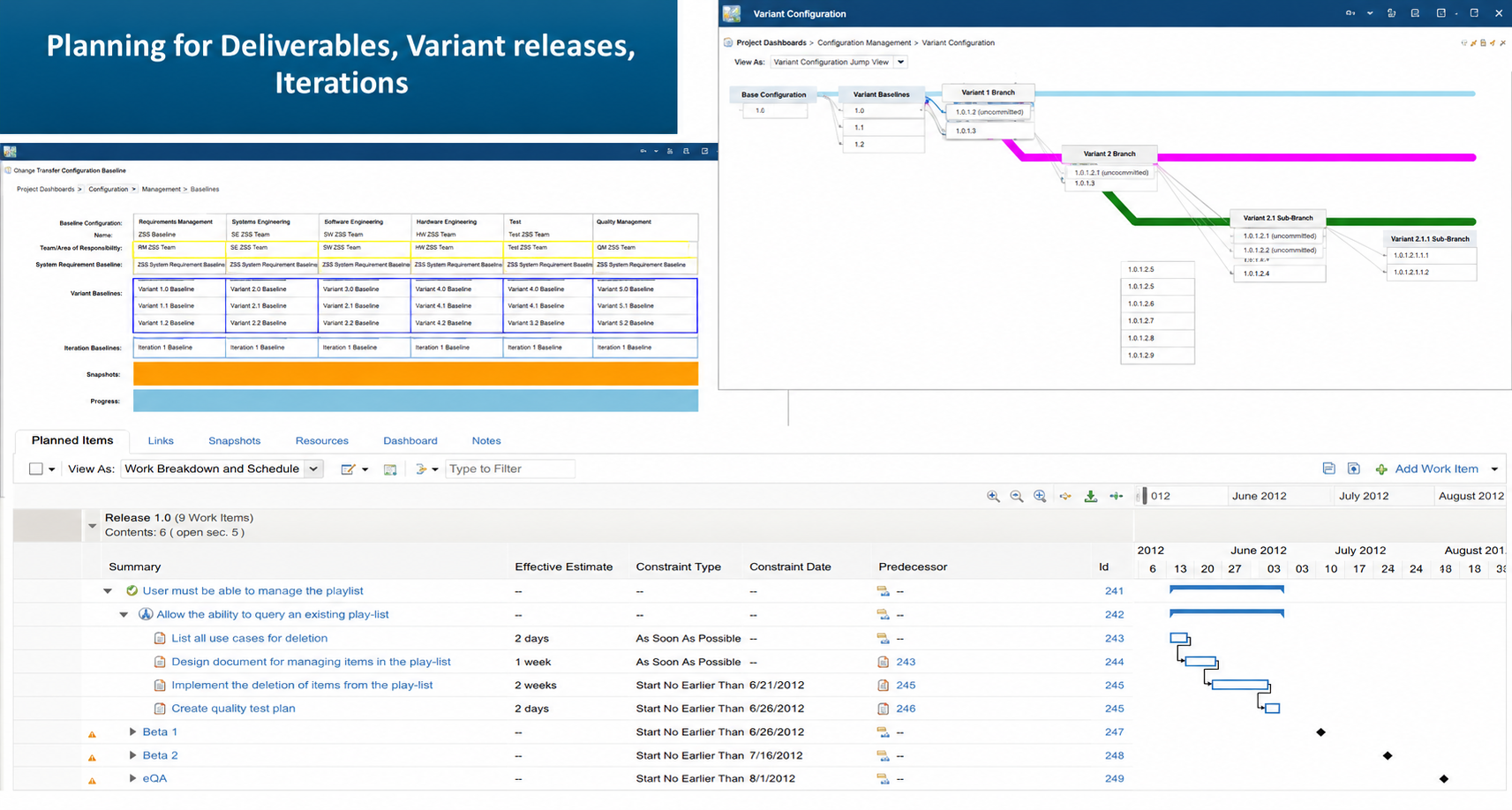
IBM ELM helps organizations manage planning activities within a connected engineering environment. IBM Engineering Requirements Management DOORS Next (DNG) provides a controlled repository for planning documents, while IBM Engineering Workflow Management (EWM) organizes engineering work through assignments, workflows, phases, and iteration plans. IBM Global Configuration Management (GCM) maintains authorized versions of planning artifacts, ensuring that teams work from approved baselines. At the same time, reporting capabilities make it easier to generate the documentation and evidence required during certification audits.
This integrated approach is particularly valuable because DO-178C auditors do more than review planning documents—they verify that the actual development activities match what was defined in those plans. By keeping plans, workflows, baselines, and evidence connected, IBM ELM helps organizations demonstrate that consistency throughout the software lifecycle.

2. Development
The development process converts requirements into design, source code, and architecture.
DO-178C Demands:
● High-level requirements (HLR)
● Low-level requirements (LLR)
● Software Architecture
● Source code aligned with LLR
● Full traceability from requirements
● Configuration management at all levels
How IBM ELM Supports Development
Doors Next
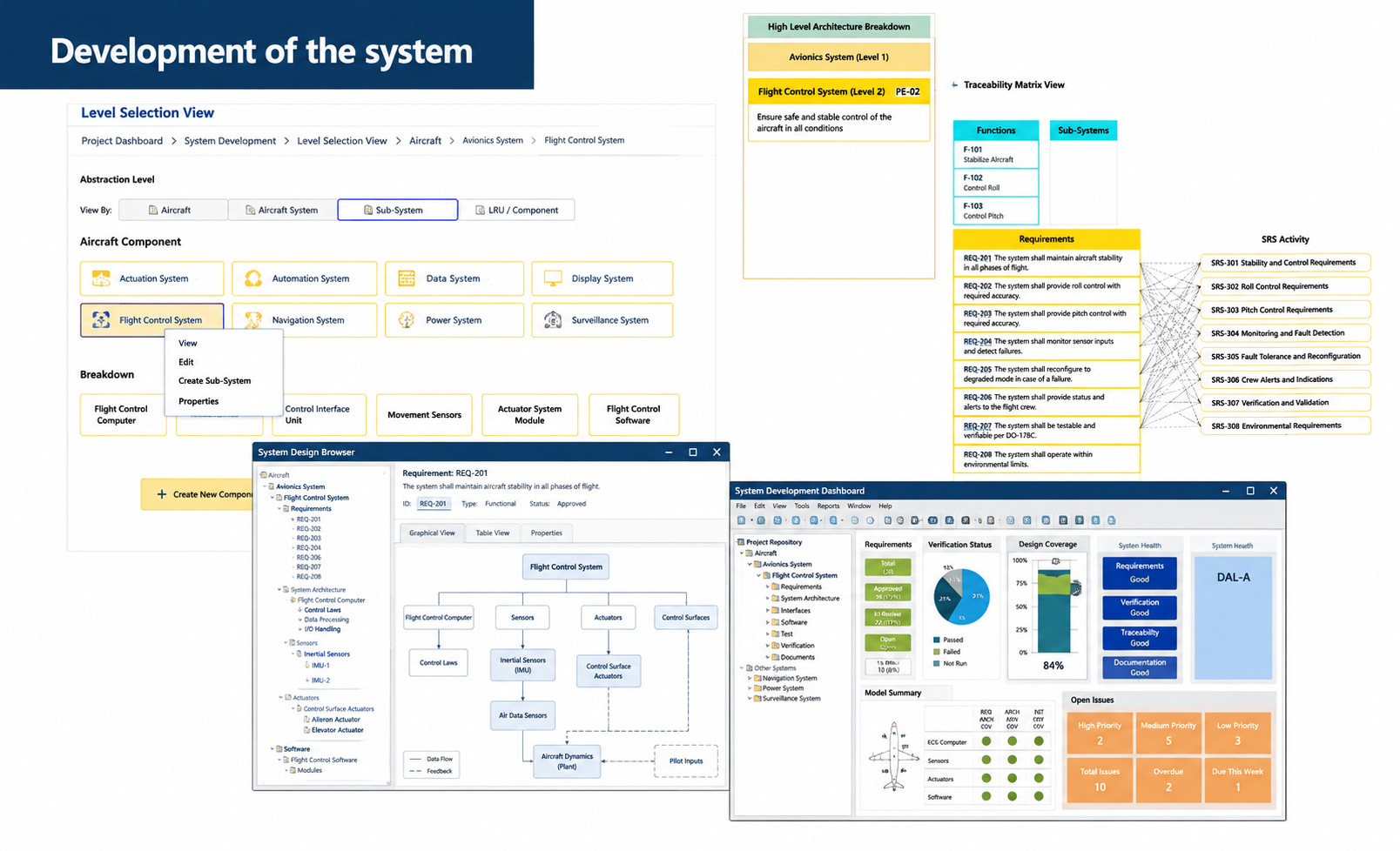
IBM ELM helps teams store and manage requirements in a way that keeps the full development chain visible. High-level requirements, low-level requirements, architecture, source code, and related tests can be connected through traceable relationships.
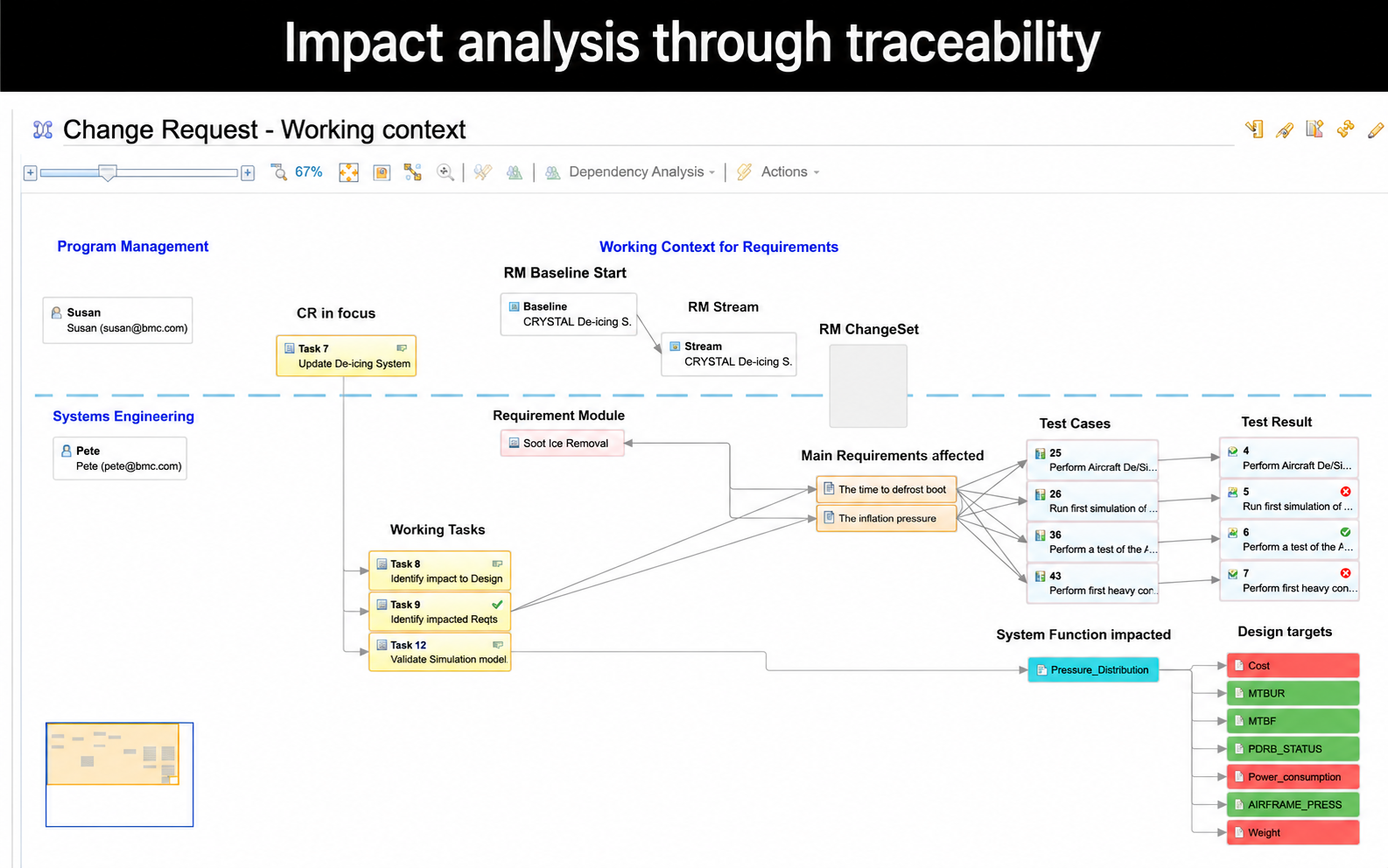
This makes it easier to understand the impact of a change, identify affected artifacts, and confirm that each requirement has the necessary test coverage. For DO-178C projects, that traceability is essential for both daily engineering control and certification evidence.
Rhapsody
● Models, systems, and software behaviour
● Generates documentation or code (depending on DAL level)
● Provides a graphical representation of the architecture
● Ensures bidirectional associativity between model and source code (model is the code, code is the model)
● Allows developers to create executable models using SysML/UML and generate production-ready code (C, C++, Ada) for safety-critical systems.
● Integrates with tools like the LDRA tool suite to perform static analysis and ensure code complies with standards such as MISRA C/C++ and ARINC 653, which is required for DO-178C, particularly for higher criticality levels.
Engineering Workflow Management (EWM)
IBM ELM also supports controlled software development by managing source code versions, approval workflows, audits, and branching rules. Code changes can be linked back to the requirements they implement, so teams can see why a modification was made and which compliance or functional need it supports.
Together, these capabilities help teams maintain a clear traceability chain from requirement to implementation. This makes it easier to show that development activities were controlled, reviewed, and aligned with DO-178C expectations.

3. Testing & Verification
Verification is one of the most important parts of DO-178C because it proves that the software does what it is supposed to do and does not introduce unacceptable risk.
In practice, verification shows that requirements have been tested, the code reflects the intended design, and the software is correct, complete, and safe for its intended aviation use. For certification, this evidence must be clear, traceable, and repeatable.
DO-178C Requires:
● Requirements-based testing
● Low-level and high-level test cases
● Structural coverage analysis
● Verification independence
● Documented test results
● Traceability from tests
● Verification of reviews, analyses, and inspections
How IBM ETM Enables Verification
IBM Engineering Test Management helps teams manage verification activities in a controlled and traceable way. Test artifacts, execution records, results, logs, screenshots, and supporting files can be captured and connected to the relevant requirements and changes.
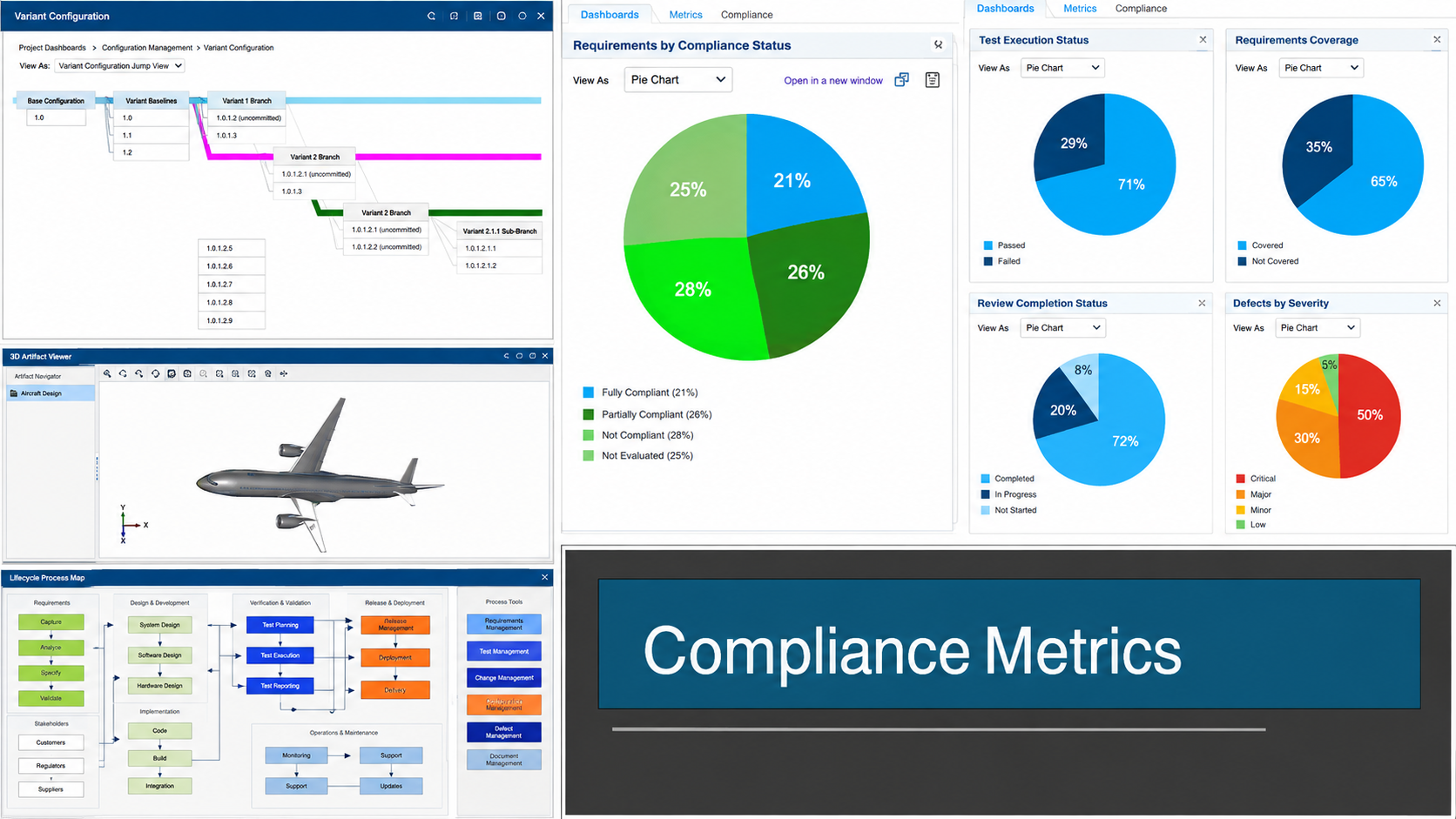
Teams can also use dashboards to monitor test progress and identify gaps before they become certification problems. Because requirements, tests, results, and changes remain linked, it is easier to demonstrate full requirements-to-test traceability.
This integrated workflow supports one of the core expectations of DO-178C: every requirement, test, result, and change should be connected to reliable evidence that can be reviewed during certification.
How Rhapsody Test Conductor Add-On Contributes
The Rhapsody Test Conductor Add-On supports model-based testing by helping teams verify and validate software behavior at the model level. This allows issues to be identified earlier, before they move into later development and verification stages.
For DO-178C projects, this is especially useful when teams work with higher Design Assurance Levels, such as DAL A, B, and C, where testing expectations are more demanding. The add-on helps connect model-based design with structured verification activities, making it easier to manage test cases, execution, results, and supporting evidence.
When integrated with IBM Engineering Test Management, Rhapsody Test Conductor can support a more complete test management workflow. Teams can keep model-level tests connected to broader verification activities, which strengthens traceability and makes certification evidence easier to organize.

Common Obstacles in Achieving DO-178C Compliance
Even experienced engineering teams can struggle to keep DO-178C evidence under control. As projects grow, it becomes harder to maintain complete traceability, manage large volumes of requirements, keep versions synchronized, adapt to changing regulations, and preserve independent verification.
The challenge is not only technical. Teams also need to organize large amounts of certification evidence and maintain strict configuration control across the lifecycle. Without the right tools and processes, this work can lead to cost overruns, schedule delays, audit findings, or certification setbacks.
How IBM ELM Overcomes These Obstacles
IBM ELM optimizes DO-178C compliance by connecting requirements, design, code, and testing into one combined toolchain. Here’s a brief analysis of how the workflow looks:
1. Capture Requirements in DOORS Next
All system and software requirements are created, reviewed, baselined, and attached to design, code, and tests. Fulfilling DO-178C traceability requirements.
📖 More details are available on our DOORS Next page
2. Model and Code in Rhapsody
Engineers develop architecture and design models (SysML/UML) and attach them back to requirements, ensuring a consistent design structure.
Then generate the production-ready executable object code directly from the model for the target environment using safety-critical frameworks (OXF/SXF), suitable for certification.
3. Manage code configurations with EWM
Developers apply the software with controlled versioning, change tracking, and mandatory reviews. All changes are linked to a requirement or task.
4. Test and Verify in ETM Test plans and test cases are performed in ETM, where all results, evidence, and coverage data are stored and connected to requirements or tasks (model-based testing provided by Rhapsody Test Conductor add-on).
How Softacus Supports Engineering Teams in Achieving DO-178C Compliance
Softacus brings extensive expertise across aviation software certification and IBM ELM solutions. Their team collaborates closely with organizations to guarantee that DO-178C compliance is seamlessly integrated into the software development lifecycle. By guiding best practices, tool configuration, and process alignment, Softacus helps teams save time, reduce errors, and maintain a clear, auditable path for requirements to verification.
Softacus specializes in:
● IBM ELM implementations
● DO-178C compliance consulting
● Requirements and test management setup
● ELM training for engineering teams
● Custom dashboards, automations, and extensions Integration with third-party systems
● Migration of legacy data into DOORS Next or ETM
With Softacus’s support, teams can concentrate on development while keeping all workflows and artifacts fully compliant. Their expertise helps streamline processes, maintain traceability, and simplify certification.

Conclusion
DO-178C forms the foundation of aviation software safety and certification. While the standard defines what must be done, tools like IBM ELM make it possible to manage requirements, workflows, testing, and documentation in an organized and traceable way.
With powerful components like DOORS Next, ETM, EWM, and Rhapsody, organizations can develop certifiable software efficiently while reducing risks, saving time, and ensuring full compliance.
For teams preparing for DO-178C certification, a properly implemented IBM ELM environment is not optional; it is essential.
Continue the series
Sign up to our newsletter
Our Services
Our Extensions
Latest blog articles
Contact Us!
Softacus Services
We, in Softacus, are experts when it comes to consulting and service delivery of IBM software products and solutions in your business. We help our clients to improve visibility and transparency when licensing and managing commercial software, providing measurable value while increasing efficiency and accountability and we are providing services in different areas (see Softacus Services).
IBM ELM extensions developed by Softacus are free of charge for the customers who ordered IBM ELM licenses via Softacus or for the customers who ordered any of our services. If you are interested in any of our IBM ELM extensions, you found a bug or you have any enhancement request, please let us know at info@softacus.com.