DO-178C Software Planning Simplified
DO-178C certification isn’t something you can handle as you go — it starts with planning. Teams need to figure out up front how they’ll meet the standard’s requirements and make sure they can show the Federal Aviation Administration and the European Union Aviation Safety Agency that everything is in order.
Software planning is not a formality. It determines the lifecycle structure, development standards, verification intensity, configuration controls, and quality assurance activities that will govern the entire project. When planning is weak or disconnected from execution, certification risk increases significantly. When planning is structured, controlled, and aligned with actual lifecycle data, compliance becomes far more predictable.
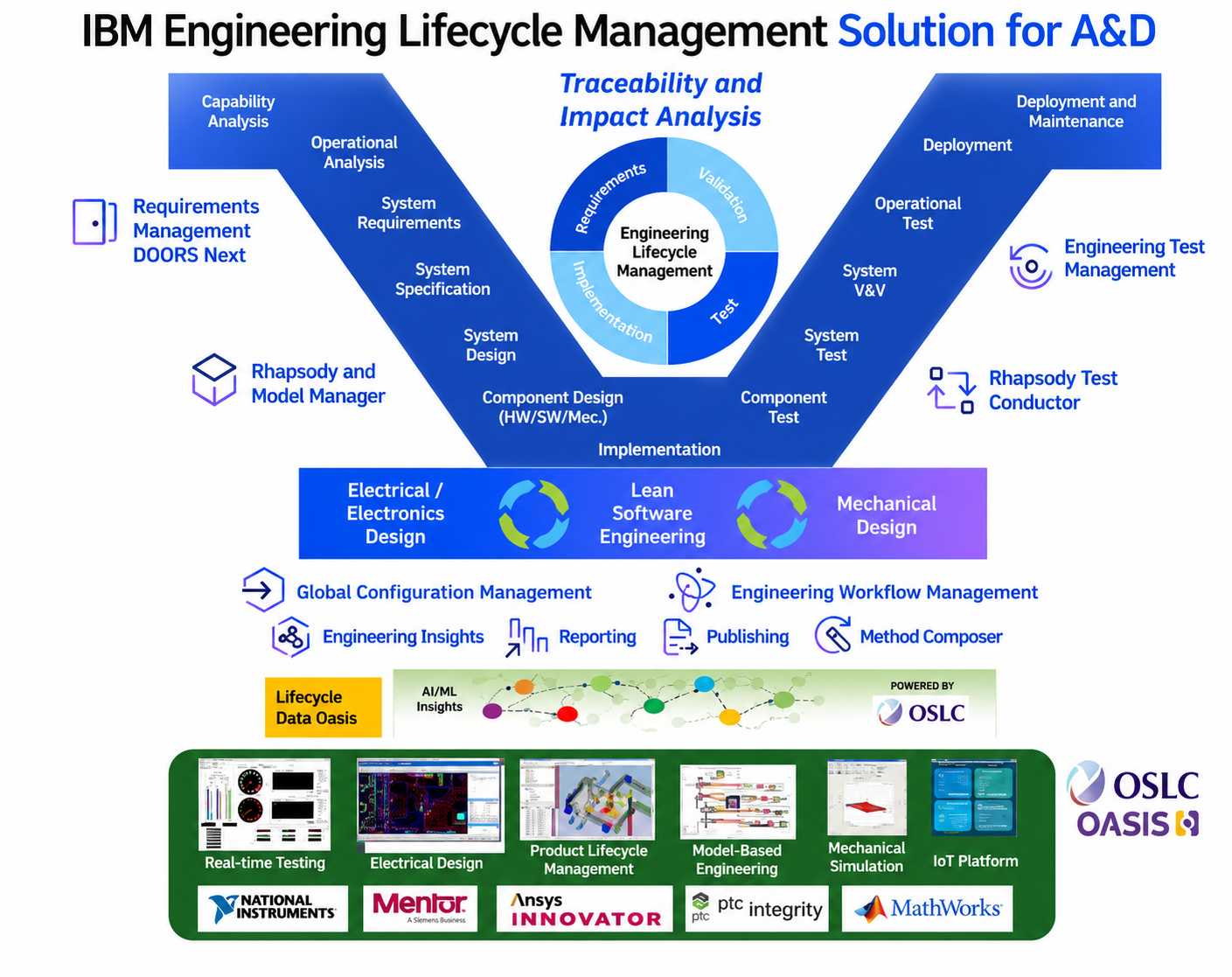
The IBM Engineering Lifecycle Management (IBM ELM) suite provides an integrated environment that allows organizations to manage software planning artifacts as living, traceable components of the lifecycle rather than static documents.
IBM ELM supports software planning by turning planning decisions into governed lifecycle activities. Instead of existing as static documents, planning information can be connected to requirements, workflows, approvals, verification activities, and configuration baselines throughout the project.

Why Planning Becomes a Challenge in DO-178C Programs
Many organizations can produce the DO-178C planning documents. The harder part is keeping day-to-day work in line with those plans as the project moves forward.
Requirements change, teams expand, verification work grows, and schedules shift. When that happens, approved plans can drift away from actual practice unless the lifecycle is tightly managed.
That is where certification problems start. Auditors do not only check whether the plans exist. They also look at whether development and verification were carried out in line with them.
A connected lifecycle environment makes that easier to manage. It links planning decisions with requirements, workflows, reviews, verification work, and the evidence needed later.

Objectives of the DO-178C Software Planning Process
DO-178C requires applicants to define and document how software lifecycle processes will satisfy certification objectives. This is typically captured in a structured set of plans, including:
● Plan for Software Aspects of Certification (PSAC)
● Software Development Plan (SDP)
● Software Verification Plan (SVP)
● Software Configuration Management Plan (SCMP)
● Software Quality Assurance Plan (SQAP)
These plans describe:
● The selected lifecycle model
● Standards and procedures for development
● Verification methods and independence levels
● Configuration management strategy
● Quality assurance responsibilities
● Tool usage and potential tool qualification
Authorities look for internally consistent documents that are properly approved, version-controlled, and aligned with real project activity. Planning should make the project’s purpose, structure, and oversight transparent.
📖 Learn more about ELM on our Aerospace & Defence Solutions page
Usual planning difficulties
In practice, many organizations struggle when planning is managed separately from the engineering workflow. Planning documents may sit in disconnected files, approvals are often tracked manually, and links between plans and execution artifacts can become unclear over time.
This creates a serious certification risk. If a plan is updated but the actual workflow does not reflect the change, teams may struggle to prove which process was followed. It can also become difficult to show which version of a plan applied to a specific baseline, review, or certification milestone.
A connected lifecycle environment helps reduce this uncertainty by keeping plans, approvals, execution artifacts, baselines, and evidence aligned in one traceable structure.
These issues create unnecessary stress during audits. Certification authorities frequently request evidence not only of what was planned but also that the project followed the approved plan.
An integrated lifecycle platform directly addresses these risks.
Linking Planning to Lifecycle Execution
One of the most powerful ways IBM ELM supports DO-178C planning compliance is through traceability. Planning artifacts can be linked directly to:
● Requirements repositories
● Design elements
● Verification strategies
● Test cases
● Work items
● Configuration baselines
For example:
- The Software Verification Plan can reference and link to actual verification workflows and test management artifacts.
- The Configuration Management Plan can be connected to real configuration streams and baseline definitions.
- The Development Plan can link to coding standards and review workflows enforced within the system.
This transforms planning documents from descriptive text into connected lifecycle nodes. Instead of asking whether teams followed the plan, organizations can demonstrate compliance through traceable relationships.
📖 Learn more about ELM on our Aerospace & Defence Solutions page

Lifecycle Model Definition and Workflow Enforcement
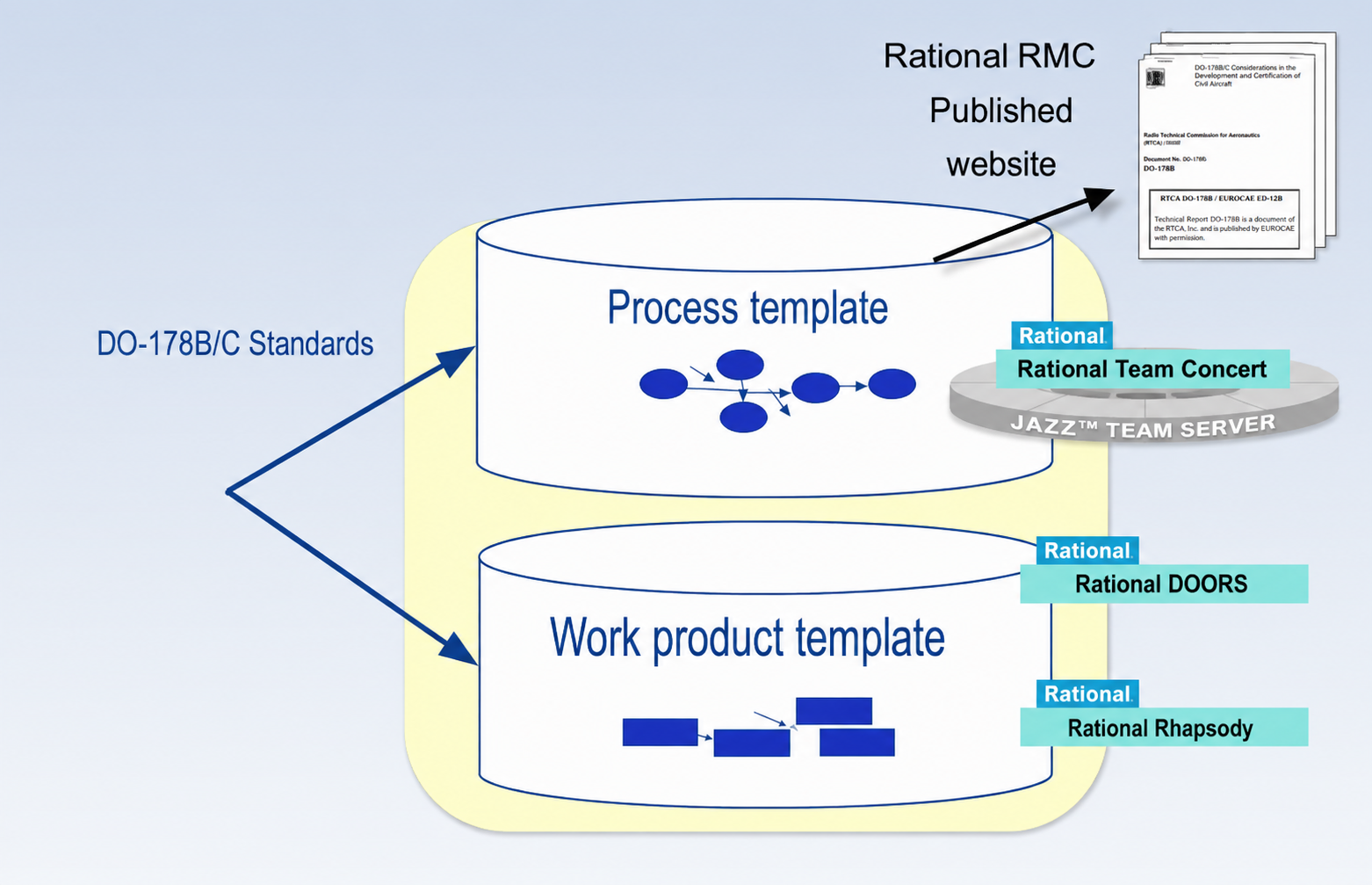
DO-178C doesn’t require a particular development method. Teams can use waterfall, iterative, or hybrid approaches, as long as the certification objectives are fully met.
Teams can configure IBM ELM so that daily workflows reflect the lifecycle model they are expected to follow. Lifecycle states, review gates, role-based responsibilities, approval steps, and entry and exit criteria can all be built directly into the workflow.
This turns planning commitments into practical controls. For example, if the plan requires independent verification for certain criticality levels, the workflow can enforce that independence instead of relying on team members to remember it manually.
By embedding governance directly into the lifecycle tool, organizations reduce dependence on informal process discipline and make compliance easier to demonstrate through everyday engineering activity.
📖 Learn more about ELM on our Aerospace & Defence Solutions page
Baseline Management and Audit Readiness
A critical component of DO-178C planning compliance is configuration control. Certification authorities may ask:
● Which plan version was active at a given milestone?
● Which configuration baseline corresponded to that plan?
● What changes occurred after approval?
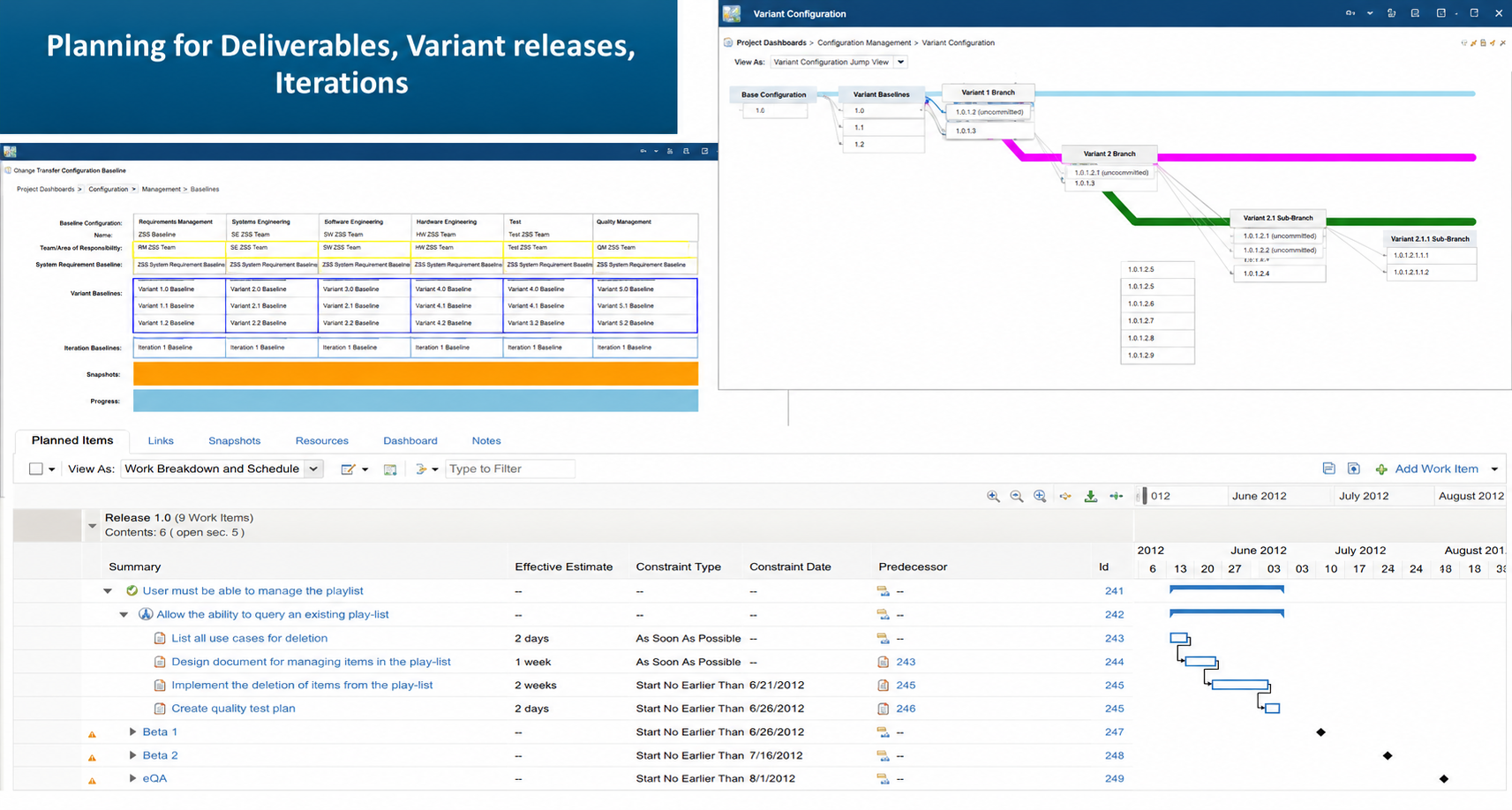
By creating baselines for both planning and development artifacts in IBM ELM, teams can:
● Create baselines at project milestones
● Associate planning documents with development baselines
● Compare versions across time
● Generate reports showing configuration status
This approach keeps audit preparation simple and efficient, because evidence is captured as part of the process rather than assembled retroactively.
Supporting Tool Strategy and Qualification Documentation
When tools automate verification activities or replace manual reviews, DO-178C may require evidence of tool qualification. In this case, teams need to show not only which tools were used, but also how those tools supported the lifecycle and what evidence they produced.
IBM ELM helps keep this information structured by connecting tool usage to planning artifacts, lifecycle activities, qualification records, and verification evidence. Tool qualification records can be managed as controlled artifacts, while outputs from supported verification activities remain linked to the relevant evidence.
This gives organizations a clearer way to demonstrate that tool-related planning was considered, documented, and maintained throughout the lifecycle.
Steps for Effective Implementation
To fully leverage IBM ELM during the planning phase, organizations should:
● Define artifact types and naming conventions before project kickoff.
● Establish traceability strategies early.
● Configure workflows to reflect certification gates.
● Baseline approved plans before development starts.
● Regularly review alignment between planning artifacts and execution data.
When planning is treated as an active lifecycle component rather than static documentation, compliance becomes structured and manageable.
How Softacus Helps Organizations Establish DO-178C Planning Processes
Defining compliant planning processes is only the first step. Organizations also need to ensure that those processes can be executed consistently, maintained throughout the lifecycle, and demonstrated during certification reviews.
Softacus helps aerospace and defence organizations configure IBM ELM to support DO-178C planning objectives through workflow governance, traceability strategies, lifecycle configuration, baseline management, review processes, and compliance-oriented reporting.
By aligning planning artifacts with day-to-day engineering activities, organizations can reduce manual compliance effort, improve audit readiness, and create a stronger foundation for the rest of the software lifecycle.
Conclusion
DO-178C planning establishes the rules that govern every subsequent development, verification, configuration management, and quality assurance activity.
IBM ELM helps organizations move beyond static planning documents by embedding governance, approvals, traceability, and lifecycle controls directly into project execution. This creates a stronger connection between planning intent and engineering reality.
For aerospace and defence organizations working in regulated environments, that connection is often what determines whether certification preparation becomes manageable or overwhelming.
Planning is where certification success begins. If you are evaluating how IBM ELM can support DO-178C planning, Softacus can help you align lifecycle governance, traceability, and compliance workflows with real engineering execution.
Continue the series
Sign up to our newsletter
Our Services
Our Extensions
More DO Content
Latest blog articles
Contact Us!
Softacus Services
We, in Softacus, are experts when it comes to consulting and service delivery of IBM software products and solutions in your business. We help our clients to improve visibility and transparency when licensing and managing commercial software, providing measurable value while increasing efficiency and accountability and we are providing services in different areas (see Softacus Services).
IBM ELM extensions developed by Softacus are free of charge for the customers who ordered IBM ELM licenses via Softacus or for the customers who ordered any of our services. If you are interested in any of our IBM ELM extensions, you found a bug or you have any enhancement request, please let us know at info@softacus.com.